Best Food in Bologna: What to Eat and Where (2026)
For a first visit to Bologna, start with tagliatelle al ragù, tortellini in brodo, and Mortadella Bologna IGP. Add lasagne verdi, crescentine fritte, gramigna with sausage, cotoletta alla Bolognese, a market stop, and gelato if your schedule allows.
The dish commonly called “Spaghetti Bolognese” abroad is not a traditional Bolognese preparation. In Bologna, ragù is most closely associated with fresh egg tagliatelle.
Bologna’s nickname La Grassa, “The Fat,” reflects a food culture built around fresh pasta, cured meats, cheese, broths, and long-cooked sauces. This guide covers what to order, five restaurants with different styles, the Quadrilatero and Mercato delle Erbe, cooking classes, gelato, aperitivo, and realistic 2026 price guidance.
A guided food tour lets you try several of these in one go while a guide explains what you are eating.
The 3 Bologna Foods to Try First
If you only have time for three foods, make them tagliatelle al ragù, tortellini in brodo, and Mortadella Bologna IGP. They give you a useful introduction to Bologna’s pasta, broth, and salumeria traditions.
1. Tagliatelle al Ragù
Tagliatelle al ragù is the clearest answer to the question of what to eat first in Bologna.
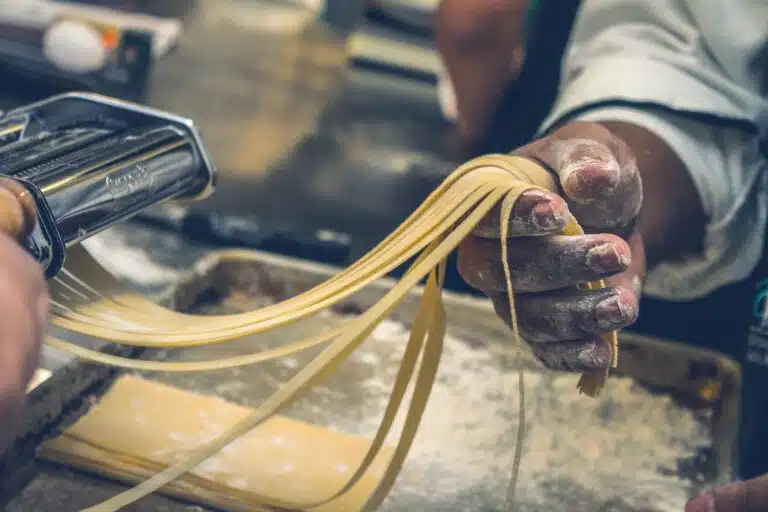
Tagliatelle is fresh egg pasta rolled thin and cut into ribbons. The updated ragù alla bolognese recipe deposited with the Bologna Chamber of Commerce in 2023 uses beef, fresh pork pancetta, soffritto, wine, tomato, and stock. It simmers for about 2 hours, or around 3 depending on the meat and preferred result.
The sauce is meat-forward and uses less tomato than many international versions of “Bolognese sauce.” Properly prepared ragù coats the broad pasta rather than behaving like a loose tomato sauce.
What to order: Tagliatelle al ragù. This is the traditional pairing to look for in Bologna.
Where to eat it: Osteria dell’Orsa offers a casual version in the university district. Trattoria Anna Maria focuses on handmade fresh pasta and traditional Bolognese dishes.
For six restaurant options, the registered recipe, and a closer look at the dish, read our best Tagliatelle al Ragù in Bologna guide.
2. Tortellini in Brodo
Tortellini in brodo is the classic broth-based version of Bologna’s filled pasta.
The registered filling includes pork loin, prosciutto, mortadella, Parmigiano Reggiano, egg, and nutmeg. The tortellini are traditionally cooked and served in meat broth, often capon or chicken-based.
Brodo is the reference preparation to try first. Cream is more complicated than the usual tourist-trap warning suggests: tortellini alla panna has documented Bolognese history going back to around 1940, when it was associated with cook Cesarina Masi. It is a later preparation, not a Roman invention.
What to order: Choose tortellini in brodo if you want the traditional benchmark. In colder weather, the broth also makes more sense than a rich cream sauce.
For seven restaurant options, price checks, and more detail on the traditional preparation, read our best Tortellini in Bologna guide.
3. Mortadella Bologna IGP
Mortadella Bologna IGP is a protected pork product with a smooth texture, visible cubes of white fat, and a delicately spiced profile. Pepper is standard, while pistachio is permitted but not required.
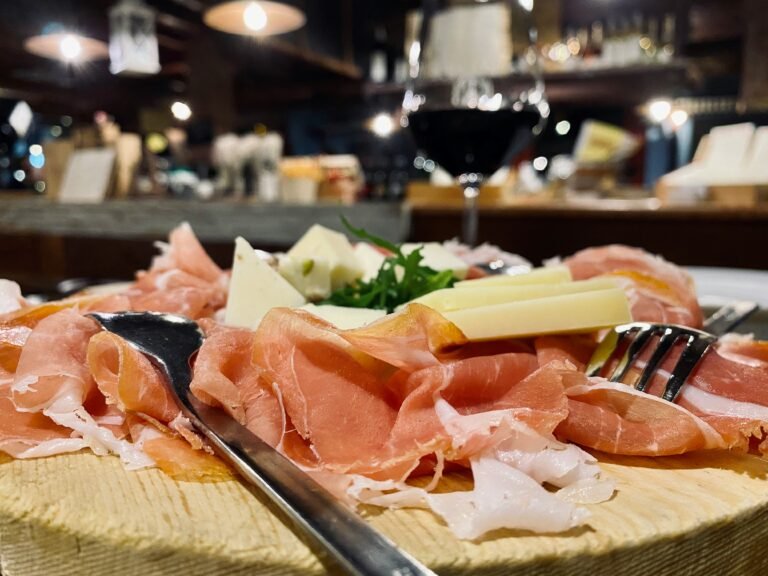
It is not the same product as the processed deli meat sold as “bologna” in several other countries. In Bologna, try it freshly sliced at a salumeria, in a simple panino, or as part of a tagliere.
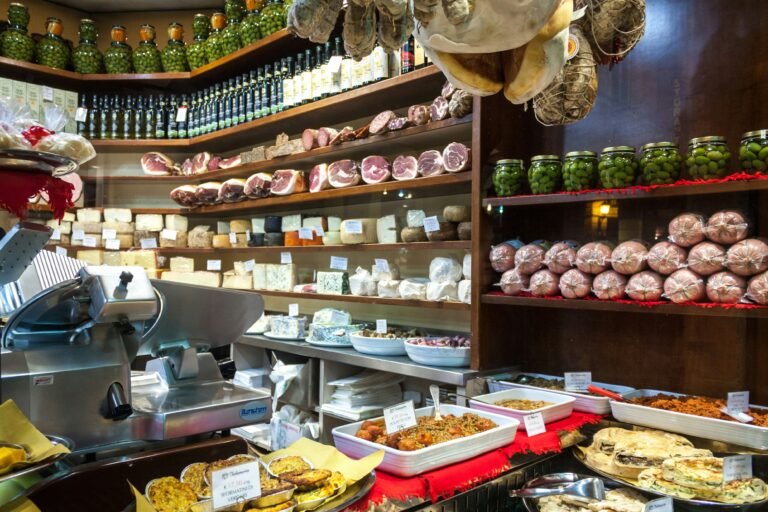
The Quadrilatero is the easiest central area for comparing historic food shops within a few streets.
For production rules, sandwiches, shops, and travel questions, read our full Mortadella in Bologna guide.
Other Bolognese dishes worth ordering:
- Lasagne verdi alla Bolognese: green spinach pasta layered with ragù, béchamel, and Parmigiano Reggiano.
- Crescentine fritte: pieces of fried dough served with cured meats and cheese. Do not confuse them with tigelle, the small griddled breads more closely associated with Modena.
- Gramigna con salsiccia: short curled pasta commonly served with sausage.
- Cotoletta alla Bolognese: veal topped with prosciutto and Parmigiano, finished with broth or meat juices and a small amount of tomato in the registered recipe.
Where to Eat: 5 Bologna Restaurants for Different Styles
These five restaurants are not interchangeable. Choose Osteria dell’Orsa for a casual no-reservation meal, Trattoria Anna Maria for handmade pasta, Drogheria della Rosa for a quieter dinner, Ristorante Diana for formal old-school service, or Oltre for a modern Bolognese menu.
| Restaurant | Best For | Address | Planning Note |
|---|---|---|---|
| Osteria dell’Orsa | Casual traditional pasta | Via Mentana 1 | No reservations; open daily 12:30–23:00 |
| Trattoria Anna Maria | Handmade fresh pasta | Via delle Belle Arti 17/A | Tuesday–Sunday, lunch and dinner |
| Drogheria della Rosa | Intimate dinner | Via Cartoleria 10 | Closed Monday; Sunday lunch only |
| Ristorante Diana | Formal traditional dining | Via Volturno 5 | Closed Monday and Sunday dinner |
| Oltre | Modern Bolognese cooking | Via Augusto Majani 1/b | Small dining room; reserve when possible |
1. Osteria dell’Orsa: Best for a Casual No-Reservation Meal
Via Mentana 1 | University District | No reservations
Osteria dell’Orsa was founded in 1979 and serves fresh pasta and other Bolognese staples in an informal setting. It is open daily from 12:30 to 23:00 and does not accept reservations.
What to order: Check the day’s pasta choices. Tagliatelle, tortellini, and lasagne are part of the restaurant’s regular Bolognese repertoire.
What to know: Because you cannot reserve, build in flexibility at busy meal times. There is no published guaranteed wait time, so do not plan around a promised 20-minute queue.
2. Trattoria Anna Maria: Best for Handmade Pasta
Via delle Belle Arti 17/A | University District | Reservations recommended
Trattoria Anna Maria is known for fresh pasta made by hand, including tagliatelle, lasagne, tortellini, tortelloni, and passatelli in brodo. Bologna Welcome currently lists it open Tuesday through Sunday for lunch and dinner.
What to order: Start with the handmade pasta. Tagliatelle, tortellini, and lasagne are the clearest choices for a first traditional meal in Bologna.
What to know: Bologna Welcome lists a €30–€40 price range. Opening schedules can change around holidays, so confirm the date when reserving.
3. Drogheria della Rosa: Best for a Quieter Dinner
Via Cartoleria 10 | Historic Center | Reservations recommended
Drogheria della Rosa is a small restaurant near the eastern side of the historic center, in a former pharmacy building.
What to order: The menu changes regularly, so use the current menu rather than arriving expecting one fixed dish.
What to know: The restaurant is closed Monday. It opens for lunch and dinner Tuesday through Saturday, and for lunch only on Sunday.
4. Ristorante Diana: Best for Formal Traditional Dining
Via Volturno 5 | Near Via dell’Indipendenza | Reservations available
Ristorante Diana traces its history to 1909 and remains one of Bologna’s formal traditional dining rooms. The menu centers on classics including tortellini in brodo, lasagne verdi, ragù, cotoletta, and bollito misto.
What to order: Choose the bollito misto if you want something beyond pasta. Tortellini in brodo is the safer first-course benchmark.
What to know: The current entrance and contact address is Via Volturno 5. Diana is closed Monday and Sunday evening, and reservations can be requested through its website.
5. Oltre: Best for Modern Bolognese Cooking
Via Augusto Majani 1/b | Near Mercato delle Erbe | Reservations recommended
Oltre takes Bolognese and Emilian cooking in a more contemporary direction. It is a 12-table restaurant with a cocktail bar and natural wines, close to Mercato delle Erbe.
What to order: Use the current menu and look for dishes that reinterpret local ingredients or techniques.
What to know: The correct address is Via Augusto Majani 1/b, not 1/a. Bologna Welcome currently lists a price point of about €40.
The Quadrilatero: Bologna’s Historic Food District
The Quadrilatero sits immediately east of Piazza Maggiore. Its compact medieval street plan is lined with salumerie, pasta shops, bakeries, produce sellers, restaurants, and wine bars.
It is both a historic shopping district and one of the busiest visitor areas in central Bologna. Several businesses have operated across generations, but expect a mix of everyday food shopping and tourism rather than an untouched local market.
What to find:
- Mortadella Bologna IGP and cured meats: sold by specialist salumerie and delis.
- Parmigiano Reggiano: sold by the wedge, with different maturation periods.
- Fresh pasta: including tortellini, tortelloni, tagliatelle, and lasagne sheets.
- Aceto Balsamico di Modena: a regional product from Modena that is widely sold in Bologna.
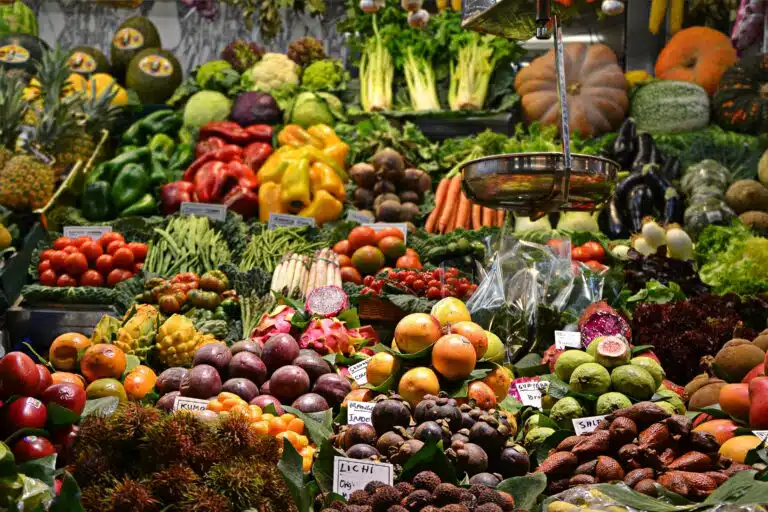
- Seasonal produce: fruit, vegetables, and other ingredients at traditional food counters.
Three useful stops:
- Paolo Atti & Figli (Via Caprarie 7): a historic bakery and pasta business with a declared start date of 1868.
- Tamburini (Via Caprarie 1): a long-running salumeria, food shop, and wine-bar stop.
- Salumeria Simoni (Via Drapperie 5/2a): the traditional Simoni shop for cured meats and deli products.
Practical tip: Use the Quadrilatero in the morning for shopping, then return around lunch if you want a tagliere or a sit-down meal. The streets are compact, so you can compare several shops without committing to the first window you see.
Mercato delle Erbe: Covered Market and Food Hall
Mercato delle Erbe is at Via Ugo Bassi 23, roughly a 10-minute walk from the Quadrilatero. It combines traditional market stalls with bars and food businesses that keep separate service hours.
The market works well when you want a covered lunch stop or a break from the tighter Quadrilatero streets. It also stays useful later in the day, because the food outlets remain open after the produce shops close.
Current market hours:
- Shops and market stalls: Monday–Saturday, 7:00 AM – 7:30 PM
- Food outlets at lunch: 12:00 PM – 3:30 PM, daily
- Food outlets in the evening: 6:00 PM – midnight, Monday–Saturday
- Food outlets on Sunday: 6:00 PM – 11:00 PM
Individual businesses inside may vary their own schedules, so check a specific venue if you are crossing town for it.
Bologna Street Food to Know
Crescentine fritte: fried dough served with cured meats or soft cheese. They work better as a shared snack than as a walk-and-eat sandwich.
Piadina: a flatbread from Romagna rather than Bologna itself, but easy to find in the city. Common fillings include prosciutto, greens, and soft cheese.
Panino con mortadella: the simplest portable way to try Mortadella Bologna IGP. Buy one from a salumeria or sandwich counter and keep the filling simple if you want the mortadella to dominate.
Learn to Make Fresh Pasta: Cooking Classes in Bologna
A pasta class is one of the few Bologna food experiences that gives you a technique to take home. Most tourist-focused classes teach some combination of dough, rolling, shaping, sauce, and a shared meal.
Prices vary by host and format. Current guide prices run from about €79 for a Cesarine home session up to about €160 for Il Salotto di Penelope or a private Felsina Culinaria villa experience, with Try and Taste in between for dietary-restriction classes.
For fixed travel dates, book ahead rather than relying on same-day availability. The right lead time depends on the provider, class size, and season.
Three Gelaterias to Know
Bologna has enough serious gelato shops that you do not need to settle for the first display around a major square. These three give you useful options in different parts of the center.
- Cremeria Cavour (Piazza Cavour): the current flavor list includes a signature Cavour flavor made with ricotta, Amalfi lemon, and shortcrust pastry.
- Galliera 49 (Via Galliera 49): known for fresh fruit sorbets and seasonal ingredients.
- Cremeria Santo Stefano (Via Santo Stefano 70/C): try the Crema delle Zitelle if it is on the current menu.
For a longer shortlist with neighborhood notes, read our guide to the best gelato in Bologna.
Food for Different Diets
Gluten-free dining in Bologna: traditional fresh pasta is wheat-based, but AIC-certified restaurants and dedicated gluten-free options are more widely available than in most Italian cities. If cross-contamination matters medically, confirm procedures directly with the restaurant rather than relying only on a menu symbol.
Read our Gluten-Free Bologna guide
Vegetarian and vegan dining in Bologna: the traditional repertoire is meat-heavy, but the city now has dedicated vegetarian and vegan restaurants as well as mixed-menu venues, driven partly by its university population.
Read our Vegetarian & Vegan Bologna guide
What Food Costs in Bologna in 2026
Restaurant spending depends more on the number of courses and wine than on a simple cheap-versus-expensive label. Trattoria Anna Maria currently lists €30–€40 per person, Ristorante Diana runs higher for a full formal meal, and Oltre is priced at about €40. Osteria dell’Orsa and Drogheria della Rosa publish a changing menu rather than a fixed price range.
For any restaurant where price matters to your budget, check the current menu before you go.
For a broader trip budget covering hotels, transport, and city tax:
Bologna Trip Cost 2026: Complete Budget Guide
For lower-cost meals and free activities:
Bologna on a Budget: Cheap Eats & Free Things to Do
Aperitivo in Bologna
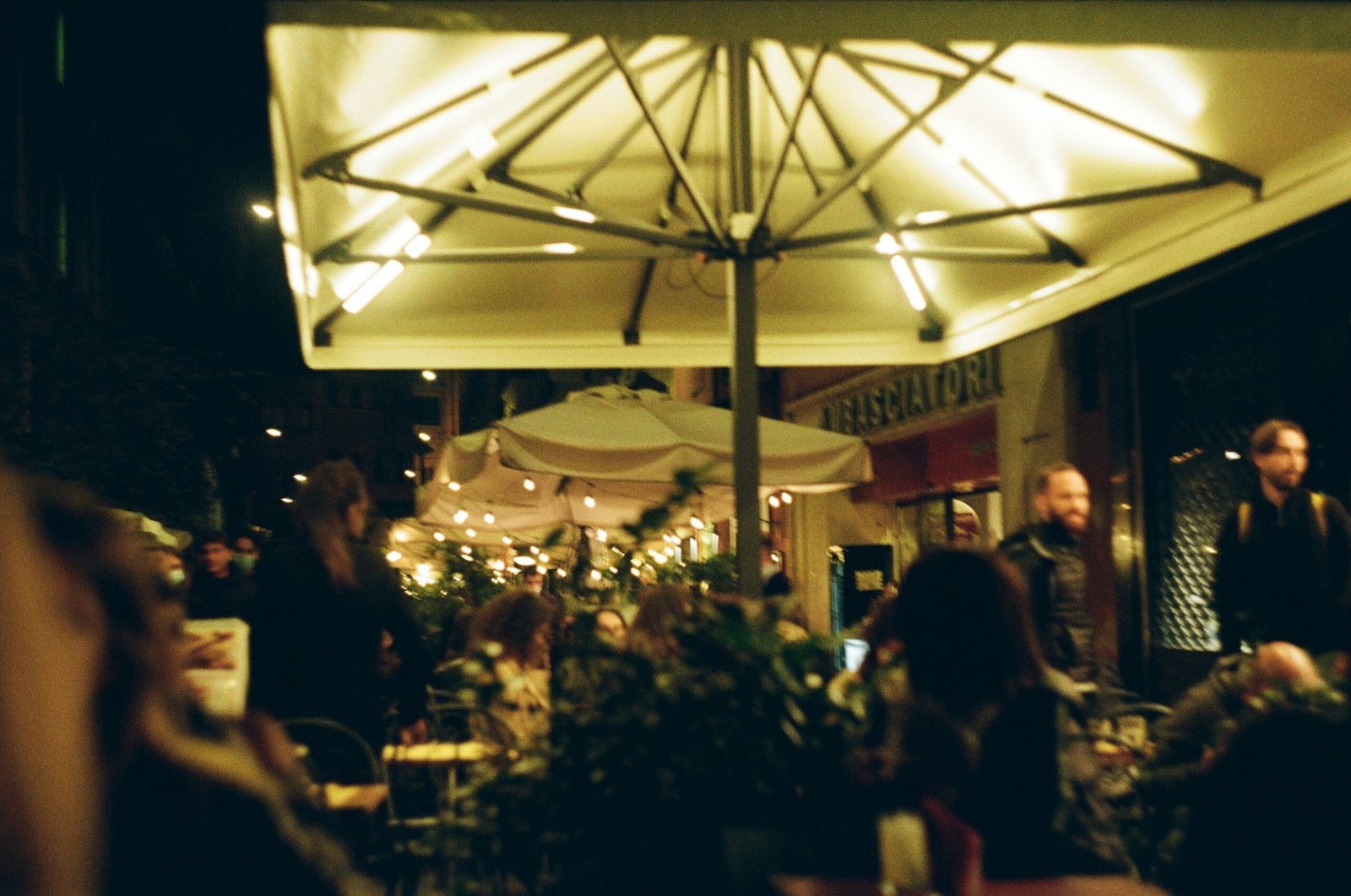
Aperitivo is part of Bologna’s evening food culture, but there is no single citywide formula. Around the Quadrilatero, Mercato delle Erbe, the university district, and Via del Pratello, you will find everything from a glass of wine with small bites to a separately ordered tagliere.
Do not assume a buffet or full plate is included with every drink. Check what a specific bar actually offers before ordering.
For something local in the glass, Pignoletto is the most direct Bologna choice. Colli Bolognesi Pignoletto DOCG is made from Grechetto Gentile and comes in frizzante, sparkling, and still styles.
Read our complete Bologna aperitivo guide for bars, neighborhoods, and practical ordering advice
Frequently Asked Questions
What is Bologna most famous for food-wise?
Tagliatelle al ragù, tortellini in brodo, Mortadella Bologna IGP, and lasagne verdi alla Bolognese are the clearest starting points. Parmigiano Reggiano is also regional, and its protected production area includes part of Bologna province. Prosciutto di Parma is different: its protected production zone is in Parma province, not Bologna.
Is Spaghetti Bolognese actually from Bologna?
No, not in the form most visitors know abroad. Bologna’s traditional pairing is tagliatelle with ragù. The Accademia Italiana della Cucina deposited a ragù alla bolognese reference recipe with the Bologna Chamber of Commerce on 17 October 1982 and replaced it with an updated version on 20 April 2023. The current recipe allows stock cubes and lists mixed beef and pork as a permitted variation.
Do I need restaurant reservations in Bologna?
Reserve popular sit-down restaurants when your schedule depends on a specific place or time. Osteria dell’Orsa is the main exception in this guide because it does not accept reservations. Trattoria Anna Maria, Drogheria della Rosa, Ristorante Diana, and Oltre are better treated as planned meals rather than guaranteed walk-ins.
What is the best market to visit in Bologna?
Choose the Quadrilatero for historic specialist shops near Piazza Maggiore. Choose Mercato delle Erbe for a covered market with food outlets and later evening service. They are about a 10-minute walk apart, so both fit easily into the same half-day.
Is Bologna good for vegetarians and vegans?
Yes, but traditional Bolognese cuisine still centers heavily on meat, eggs, and cheese. Dedicated plant-based restaurants and mixed-menu venues are available across the city. For specific addresses, see our Vegetarian & Vegan Bologna guide.
What should I drink with food in Bologna?
Pignoletto is the wine most directly associated with the Colli Bolognesi. It can be still, frizzante, or sparkling. For aperitivo, you will also see Aperol Spritz and a broad range of regional Italian wines, but Pignoletto gives you the clearest local reference.
Book Ahead
Cooking classes: learn to make fresh pasta yourself. Best Cooking Classes in Bologna, ranked and reviewed
Food tours: let a local guide walk you through the Quadrilatero and explain everything.
Accommodation: stay centrally to walk to every market, restaurant, and bar in this guide. Where to Stay in Bologna, best neighborhoods and hotels. For a food-first choice, Where to Stay in Bologna for Food Lovers shows which hotels shorten the walk to the table.
Plan Your Trip to Bologna
- 2 Days in Bologna: The Perfect Weekend Itinerary, a practical sequence for a first visit
- The Ultimate Aperitivo Guide, where to drink before dinner
- Best Gelato in Bologna, seven gelaterias with neighborhood notes
- Best Coffee in Bologna, historic cafes and specialty coffee
- The UNESCO Porticoes of Bologna, how to explore the city’s defining covered walkways
- Start Here, plan the wider trip around your available time
More Bologna food and drink guides, restaurants, markets, gelato and coffee, are collected in Eat & Drink.