Best Tagliatelle al Ragù in Bologna: 6 Restaurants (2026)
If you want one place to start, All’Osteria Bottega is the strongest all-round choice in this shortlist, with tagliatelle al ragù at €14 on its July 2026 menu. Trattoria Anna Maria is a better fit if handmade pasta and a classic trattoria setting matter more than a published online price.
Spaghetti Bolognese is not the traditional Bolognese pairing. In Bologna, ragù is classically served with fresh egg tagliatelle.
The combination is simple: egg pasta, slow-cooked meat ragù, and Parmigiano Reggiano at the table. The details matter, particularly the pasta texture and the balance between meat and tomato.
This guide compares six places to try it, with current hours, published prices where available, and the practical differences between them.
For the companion dish, see Best Tortellini in Bologna: 7 restaurants where the broth is golden and the pasta is hand-folded.
For the broader food picture, see The Ultimate Bologna Food Guide: what to eat, where to go, and what makes the food here different.
Our pick: pasta, ragù & gelato classWhat Makes Tagliatelle al Ragù Authentic?
The Accademia Italiana della Cucina deposited a recipe for ragù alla bolognese with the Bologna Chamber of Commerce on 17 October 1982. It replaced that reference recipe with an updated version on 20 April 2023.
For six people, the current recipe specifies:
- 400 g coarsely ground beef
- 150 g fresh sliced pork pancetta
- About 60 g each of onion, carrot, and celery
- 3 tablespoons extra virgin olive oil
- 1 glass red or white wine
- 200 g passata
- 1 tablespoon double tomato concentrate
- Light meat or vegetable stock
- 1 glass whole milk, optional
- Salt and pepper
A good-quality stock cube is explicitly allowed.
After the pancetta, vegetables, and meat have cooked and the wine has evaporated, the tomato and stock are added. The ragù then cooks slowly, covered, for about 2 hours. The registered method allows around 3 hours depending on the meat and preferred result.
Milk may be added halfway through cooking.
The base recipe contains no garlic or herbs. A small amount of nutmeg appears among the permitted variations.
What About the Tagliatelle?
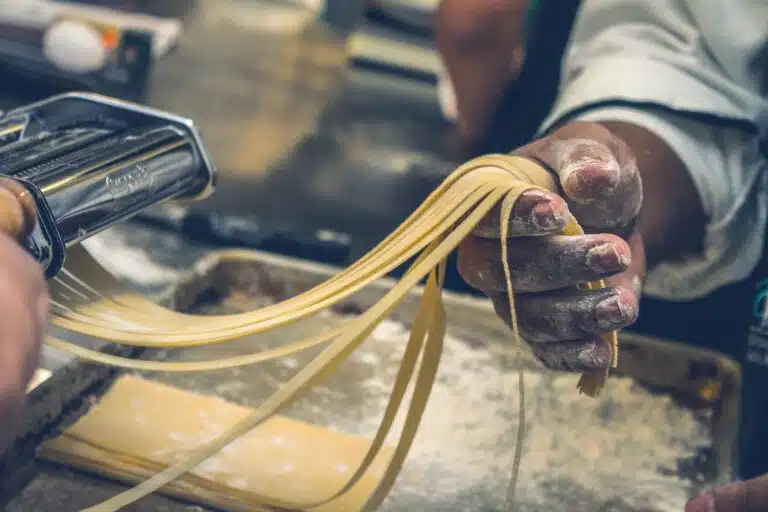
Traditional Bolognese tagliatelle are fresh egg pasta. The deposited standard gives a width of 8 mm after cooking, or approximately 7 mm when raw.
That is where the famous comparison with the Asinelli Tower comes from: 8 mm represents 1/12,270th of the tower’s height.
The rough surface of fresh egg pasta also gives the ragù something to cling to. The sauce should coat the ribbons rather than sit as a separate pool underneath them.
Quick Comparison: Where to Eat Tagliatelle al Ragù
| Restaurant | Best For | Current Price Information | Reservations | Current Hours |
|---|---|---|---|---|
| All’Osteria Bottega | A more polished traditional meal | €14 | Book ahead | Tue–Sat 12:30–14:30 and 20:00–22:30 |
| Trattoria Anna Maria | Handmade pasta in a classic trattoria | Dish price not confirmed online; €30–€40 for a meal | Book ahead for dinner | Tue–Sun 12:30–15:00 and 19:30–23:00 |
| Osteria dell’Orsa | Casual dining without reservations | Current dish price not published | No reservations | Daily 12:30–23:00 |
| Trattoria del Rosso | Fixed-menu value | €10 fixed menu | Reservation required | Daily 12:00–15:00 and 19:00–22:30 |
| Osteria Angolo degli Orefici | A late dinner near the Quadrilatero | €14 | Recommended | Tue–Sun 11:00–01:00 |
| Da Cesari | A family-run traditional meal | Current dish price not published | Book ahead | Mon–Sat 12:30–14:30 and 19:30–22:30 |
Prices and hours can change. Check again when you book, particularly around holidays and summer closures.
1. All’Osteria Bottega: Best for a More Polished Traditional Meal
Address: Via Santa Caterina 51
Tagliatelle al ragù: €14 on the July 2026 menu
Hours: Tuesday–Saturday, 12:30–14:30 and 20:00–22:30
Closed: Sunday and Monday
Reservations: Book ahead
All’Osteria Bottega is the most polished option in this six-restaurant shortlist without turning the meal into a formal fine-dining experience.
Its current menu lists tagliatelle al ragù alla bolognese at €14. If you want to continue with a secondo, the menu is built for a full traditional meal rather than a quick pasta stop.
The restaurant takes reservations by phone. Dinner is the meal for which booking ahead matters most.
Best for: travelers who want a focused traditional meal and prefer to reserve rather than queue.
2. Trattoria Anna Maria: Best for Handmade Pasta
Address: Via delle Belle Arti 17/A
Current online price information: €30–€40 for a meal; a current dish-specific tagliatelle price could not be confirmed
Hours: Tuesday–Sunday, 12:30–15:00 and 19:30–23:00
Closed: Monday
Reservations: Book ahead for dinner
Trattoria Anna Maria is closely associated with handmade Bolognese pasta. Tagliatelle, tortellini, and other fresh pasta dishes remain central to the menu.
The room is traditional rather than minimalist, with photographs and memorabilia accumulated over decades. That atmosphere is part of the reason to choose it over a newer restaurant.
Do not rely on older €14–€18 estimates still repeated online. A current dish-specific price was not available from the strongest sources.
Best for: handmade pasta and a classic trattoria setting.
3. Osteria dell’Orsa: Best Without a Reservation
Address: Via Mentana 1/F
Hours: Daily, 12:30–23:00
Reservations: Not accepted
Current tagliatelle price: Not published on the official website
Osteria dell’Orsa is the easiest choice here when you have not booked anywhere.
The restaurant serves continuously from 12:30 to 23:00 and does not take reservations. Its menu centers on informal Bolognese cooking, including house-made pasta.
Communal seating and a busy room are part of the format. If you prefer a quieter, slower dinner with a reserved table, choose another restaurant on this list.
Arriving outside the busiest lunch and dinner periods may reduce the wait, but there is no separate “first sitting,” because the restaurant operates continuously.
For more lower-cost food ideas, see Bologna on a Budget: eating well for less, including cheap lunch options.
Best for: flexibility, an informal meal, and visitors without a reservation.
4. Trattoria del Rosso: Best for Fixed-Menu Value
Address: Via Augusto Righi 30
Hours: Daily, 12:00–15:00 and 19:00–22:30
Reservations: Recommended
Trattoria del Rosso is the value-led option in this group.
A €10 fixed menu currently listed for this trattoria includes a first course, second course, dessert, water, a quarter-litre of wine, service, and cover. Because set-menu details can change quickly, confirm what is included before ordering.
Tagliatelle al ragù is among the restaurant’s traditional specialties, but a current stand-alone dish price could not be verified from a primary menu.
The location on Via Augusto Righi also makes it convenient for a lunch while exploring the northern side of the historic center.
Best for: travelers prioritizing a set-menu price over a destination meal.
5. Osteria Angolo degli Orefici: Best for a Late Dinner
Address: Via degli Artieri 1G
Tagliatelle al ragù: €14
Hours: Tuesday–Sunday, 11:00–01:00
Closed: Monday
Reservations: Recommended
Osteria Angolo degli Orefici solves a practical Bologna problem: finding a full meal later in the evening.
The restaurant stays open until 01:00 and lists tagliatelle al ragù at €14 on its current menu. It sits in the Quadrilatero, so it also works naturally after an evening in the central market streets.
The restaurant opened in 2020, so choose it for location and hours rather than for generations of family history.
Best for: a late dinner near Piazza Maggiore and the Quadrilatero.
6. Da Cesari: Best for a Family-Run Traditional Meal
Address: Via de’ Carbonesi 8
Hours: Monday–Saturday, 12:30–14:30 and 19:30–22:30
Closed: Sunday
Current tagliatelle price: Not published on the official menu
Reservations: Book ahead
The Cesari family has run Da Cesari since 1955. The current menu still includes tagliatelle alla bolognese among its traditional pasta dishes.
This is a good choice if you want tagliatelle as one course in a longer Bolognese meal rather than treating the pasta itself as the entire reason for dinner.
The official online menu does not currently publish a price for the tagliatelle, so do not rely on older €14–€16 estimates.
Best for: a conventional multi-course trattoria meal in a family-run restaurant.
What Should You Not Order Instead?
Spaghetti Bolognese
If you want the traditional Bologna pairing, order tagliatelle al ragù rather than spaghetti Bolognese.
The internationally familiar combination of spaghetti with a tomato-heavy meat sauce is not the local reference dish described by Bologna’s registered recipes.
Ragù with Cream
Cream is not part of the 2023 deposited base recipe. Whole milk is optional and may be added during cooking.
That does not mean one menu deviation proves a restaurant is poor. It does mean that a cream-heavy sauce should not be presented as the registered Bologna recipe.
Dried Pasta
Traditional tagliatelle are fresh egg pasta. If a menu is unclear about the pasta, ask.
Dried pasta with meat sauce can be perfectly good food, but it is not the fresh tagliatelle format this Bologna dish is built around.
For more advice on reading Bologna menus, see First Time in Bologna? Practical advice on what to order.
How Much Does Tagliatelle al Ragù Cost in Bologna?
Current online prices are less consistent than an older €10–€18 range suggests.
Two prices in this shortlist can currently be verified directly: All’Osteria Bottega lists tagliatelle al ragù at €14, and Angolo degli Orefici also lists it at €14.
Other restaurants do not all publish a current dish price online. Trattoria del Rosso is notable for its €10 fixed-menu offer, while Trattoria Anna Maria’s meals are listed in a broader €30–€40 range.
Treat any unverified dish-specific price as changeable rather than filling the gap with an estimate.
Make It Yourself: The Cooking Class Option
A pasta class is useful if you want to understand the part of tagliatelle al ragù that is hardest to reproduce from a written recipe: the fresh pasta itself.
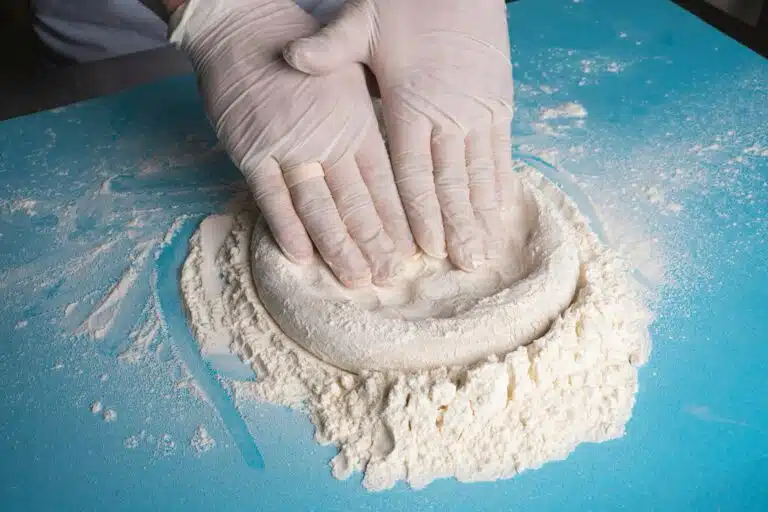
The linked GetYourGuide experience takes about 3 hours and focuses on making fresh tagliatelle by hand. You learn to work the dough, roll it, cut the pasta, and then eat the finished tagliatelle with ragù.
There is one important distinction. Current descriptions state that participants do not cook the ragù themselves during this class; the ragù is prepared in advance for time reasons.
Choose this experience for pasta technique, not for a complete lesson in preparing the sauce from soffritto to finished ragù.
See Best Cooking Classes in Bologna: which classes teach fresh pasta and how far ahead to book.
The Food Tour Option
A food tour is the better choice if you want to place tagliatelle within a broader Bologna food itinerary rather than cook it yourself.
The linked walking food tour takes roughly 3 hours and includes multiple food and wine tastings. Current descriptions include tagliatelle and tortellini among the pasta tastings, alongside cured meats, cheese, and other local foods.
That makes it more useful for first-time visitors who want context across several Bolognese specialties in one outing.
Frequently Asked Questions
What is Tagliatelle al Ragù alla Bolognese?
Tagliatelle al ragù is fresh egg pasta served with Bologna’s slow-cooked meat ragù. The current registered recipe uses beef, pancetta, onion, carrot, celery, wine, tomato, stock, extra virgin olive oil, and optional whole milk. The ragù reference recipe was first deposited in 1982 and replaced with an updated version in 2023.
What is the best restaurant for Tagliatelle al Ragù in Bologna?
All’Osteria Bottega is the strongest all-round choice in this shortlist if you want a reserved, traditional meal with a current published price. Its July 2026 menu lists tagliatelle al ragù at €14. Choose Trattoria Anna Maria for handmade pasta and a classic trattoria setting, or Osteria dell’Orsa if you need somewhere that does not require a reservation.
Why is Spaghetti Bolognese different?
Spaghetti Bolognese is an international adaptation rather than Bologna’s traditional pasta-and-ragù pairing. In Bologna, the reference combination is ragù alla bolognese with fresh egg tagliatelle. The wider ribbons and rough egg-pasta surface work particularly well with the meat sauce.
What makes the 2023 ragù recipe different?
The current recipe is meat-led rather than tomato-led. For six people, it uses 400 g beef, 150 g pancetta, 200 g passata, one tablespoon of tomato concentrate, wine, vegetables, stock, and three tablespoons of extra virgin olive oil. Whole milk is optional. Garlic and herbs are not part of the base recipe.
How much does Tagliatelle al Ragù cost in Bologna?
Among restaurants in this guide with a directly published current price, All’Osteria Bottega and Angolo degli Orefici both list the dish at €14. Several other restaurants do not publish a current stand-alone price online, so an exact citywide range would give more certainty than the available evidence supports.
Can I learn to make it in a Bologna cooking class?
Yes, but check what the class actually teaches. The GetYourGuide class linked above focuses on making fresh tagliatelle and serves it with ragù. Current descriptions say participants do not prepare the ragù itself during the class. If your priority is learning both the pasta and the sauce from scratch, compare the individual class programme before booking.
Plan Your Bologna Food Experience
- The Ultimate Bologna Food Guide: Tagliatelle al Ragù alongside the other dishes to know
- Best Tortellini in Bologna: 7 restaurants for Bologna’s filled pasta
- Best Cooking Classes in Bologna: make fresh pasta from scratch
- The Ultimate Aperitivo Guide: how to plan drinks before dinner
- Where to Stay in Bologna: central areas for reaching restaurants on foot
- Where to Stay in Bologna for Food Lovers: walking times from 11 hotels to the food
- First Time in Bologna? Practical advice on what to order
More Bologna food and drink guides, including restaurants, markets, gelato and coffee, are collected in Eat & Drink.