5 Hidden Gems in Bologna: A Practical 2026 Guide
Five Bologna hidden gems worth adding to a trip are San Michele in Bosco, the Finestrella di Via Piella, Palazzo Poggi, Le Serre dei Giardini Margherita, and Certosa di Bologna. Together they cover a free hilltop panorama, canal history, scientific collections, a greenhouse cultural space, and a monumental cemetery.
Not every stop is genuinely secret. Via Piella is now one of Bologna’s better-known photo stops, while the other four give you useful alternatives to the headline sights in the historic center.
For your base: See our guide to the best places to stay in Bologna
San Michele in Bosco: A Free City Panorama
Entry: Free
Address: Via Pupilli 1
Hours: Daily, 9:00 AM–12:00 PM and 4:00–6:00 PM
Getting there: Bus 30 from Bologna Centrale, or an uphill walk
Time needed: About 45–90 minutes
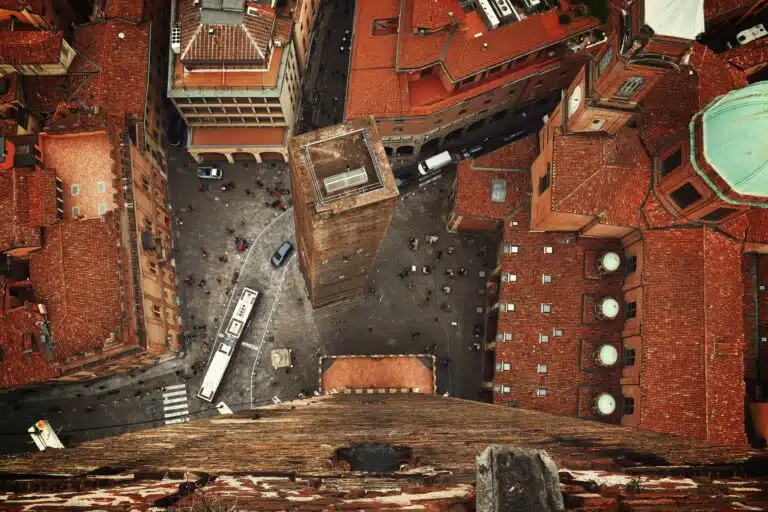
San Michele in Bosco is a former Olivetan monastery complex on a hill just south of the historic center. Its terrace looks back over Bologna, and because you are outside the center looking in, the towers, church domes, and red roofs sit in one frame.
Entry is free. During religious services, tourist visits may be limited or suspended, and visits to the monumental complex itself need advance booking. Check ahead if the interior matters to you.
TPER line 30 runs from Bologna Centrale through Piazza Malpighi and Porta Castiglione to the San Michele in Bosco stop. Porta Castiglione is also the stop for Le Serre (gem 4 below), so the two fit naturally into one outing. Walking up takes longer than the bus.
The Asinelli Tower remains closed to visitors, and the Garisenda beside it is under restoration. The municipality’s 2028 target refers to completion of the Garisenda work. It is not a published reopening date for Asinelli, so San Michele is a free skyline option in the meantime. Our Asinelli Tower guide compares it with the Clock Tower and other views.
If you would rather see the hills than return straight to the center, the guided e-bike tour below runs about 3 hours and includes an aperitivo with local wine and products.
Finestrella di Via Piella: Bologna’s Canal Window
Entry: Free
Address: Via Piella 16/a–18/a
Time needed: About 10–20 minutes
The Finestrella di Via Piella looks onto the Canale delle Moline, one of the few stretches of Bologna’s medieval canal network that stayed visible. Most of the canals were covered or diverted underground between the early 20th century and the postwar years.
Open the small wooden shutter and you see water running between colored houses. This is the least hidden stop in the guide, because it now appears in mainstream Bologna sightseeing material and is widely photographed.
Do not limit the stop to the shutter. Via Malcontenti and Via Oberdan also have viewpoints onto the same canal, which gives you a better sense of how the water runs between the buildings.
For more on another defining layer of the city, see The UNESCO Porticoes of Bologna: a photography and walking guide.
If you want context for the historic center, a guided walking tour is available below.
Palazzo Poggi: Scientific Collections on Via Zamboni
Entry: €10 full price; €6 reduced for eligible visitors; several categories enter free
Address: Via Zamboni 33
Hours: Tuesday to Friday 10:00 AM–4:00 PM; Saturday, Sunday, and public holidays 10:00 AM–6:00 PM; closed on non-holiday Mondays
Time needed: About 1–2 hours
Palazzo Poggi is part of the University of Bologna’s museum network. Its collections include naval models, military architecture, physics instruments, natural history specimens, and anatomical waxes, alongside the obstetrics collection.
The anatomy and obstetrics rooms are the part that best fits this guide, because they show how the university taught and studied the human body.
Standard adult admission is €10. Reduced admission is €6 for listed categories, while University of Bologna students and staff, visitors under 19, teachers, and several other categories enter free. Last admission is 30 minutes before closing.
The companion visit: The Anatomical Theatre at the Archiginnasio is the logical pairing if you want to continue the medical-history theme. The official visit system lists €10 for the audioguide route and €12 for a guided visit at full price, and the Archiginnasio is closed on Sundays.
See our full Bologna museums guide: including the Archiginnasio and Motor Valley options
Le Serre dei Giardini Margherita: Greenhouse Culture
Outdoor access: Free
Address: Via Castiglione 134, with another entrance from Viale Stenio Polischi 9
Getting there: Buses 32 and 33 from Bologna Centrale to Porta Castiglione, then about 2 minutes on foot; bus 30 also stops at Porta Castiglione
Entry: On foot or by bicycle only
Time needed: About 1–3 hours
Le Serre occupies the old greenhouse area inside Giardini Margherita. Today it combines a bar and bistrot called VETRO, a program of cultural events, and a coworking community.
Opening hours vary by day and season, so check the current schedule before you go rather than relying on a fixed range.
For the broader bar scene, see The Ultimate Bologna Aperitivo Guide: best bars, neighborhood by neighborhood.
For more free and low-cost ideas, see Bologna on a Budget: free activities and cheap experiences.
Certosa di Bologna: Monumental Cemetery and Sculpture
Entry: Free
Address: Via della Certosa 18
Hours: March 1 to November 2, 8:00 AM–6:00 PM; November 3 to February 28, 8:00 AM–5:00 PM
Time needed: About 60–90 minutes
Certosa di Bologna became a cemetery at the start of the 19th century, within a former Carthusian monastery. Its cloisters, galleries, funerary monuments, paintings, and sculpture make it as much an art and architecture visit as a cemetery walk.
The site is large. Bologna Welcome provides an information leaflet with a map of the 33 most significant tombs, which is useful if you want more than an unstructured walk.
Published summer hours differ slightly between sources. The municipal cemetery service lists 8:00 AM, while Bologna Welcome lists 7:00 AM, so plan for 8:00 AM to be safe.
Accessibility varies across the complex. Bologna Welcome recommends the Via della Certosa 18 entrance for wheelchair users.
Quick Reference
| Hidden Gem | Cost | Time Needed | Best For |
|---|---|---|---|
| San Michele in Bosco | Free | 45–90 minutes | City panoramas, photography |
| Finestrella di Via Piella | Free | 10–20 minutes | Canal history, a quick photo stop |
| Palazzo Poggi | €10 full price | 1–2 hours | Science, anatomy, university history |
| Le Serre dei Giardini Margherita | Free outdoor access; food and drink extra | 1–3 hours | Green space, food and events |
| Certosa di Bologna | Free | 60–90 minutes | Sculpture, architecture, quieter sightseeing |
Frequently Asked Questions
What are the best hidden gems in Bologna?
Five useful choices are San Michele in Bosco for a free panorama, Via Piella for Bologna’s canal history, Palazzo Poggi for scientific collections, Le Serre for green space and cultural programming, and Certosa di Bologna for monumental sculpture and architecture.
Is there a free viewpoint in Bologna?
Yes. San Michele in Bosco has a free hilltop viewpoint south of the historic center. It is open daily from 9:00 AM to 12:00 PM and from 4:00 to 6:00 PM, and tourist access can be restricted during religious services.
What is the Finestrella di Via Piella?
The Finestrella is a small shutter at Via Piella 16/a–18/a overlooking the Canale delle Moline. You can also see the canal from Via Malcontenti and Via Oberdan. It is free and needs only about 10–20 minutes.
Is the Asinelli Tower open in 2026?
No. The Asinelli Tower is closed to visitors, and the Garisenda beside it is under restoration. The 2028 target refers to completion of the Garisenda work, not to a confirmed Asinelli reopening date.
Is the Certosa di Bologna worth visiting?
It suits you if you like sculpture, architecture, or a quieter alternative to the central monuments. Entry is free. Allow about 60 to 90 minutes and use the leaflet map if you want to find the most significant tombs.
What is Le Serre dei Giardini Margherita?
Le Serre is a former greenhouse area inside Giardini Margherita that now combines the VETRO bar and bistrot, cultural events, and coworking. Outdoor access is free, and it is reached on foot or by bicycle only.
Plan Your Bologna Trip
- Where to Stay in Bologna: from budget hostels to central hotels
- 2 Days in Bologna: The Perfect Weekend Itinerary (where to fit these stops)
- Bologna Museums Guide: the Archiginnasio, Palazzo Poggi, and the Motor Valley
- The Ultimate Bologna Aperitivo Guide: Le Serre and bars across the city
- The UNESCO Porticoes of Bologna: a walking and photography guide
- Bologna on a Budget: free activities and lower-cost experiences
- Start Here: how many days you need and what to read first
More on what to see and do across the city is collected in Things to Do.