The UNESCO Porticoes of Bologna: A Photography & Walking Guide (2026)
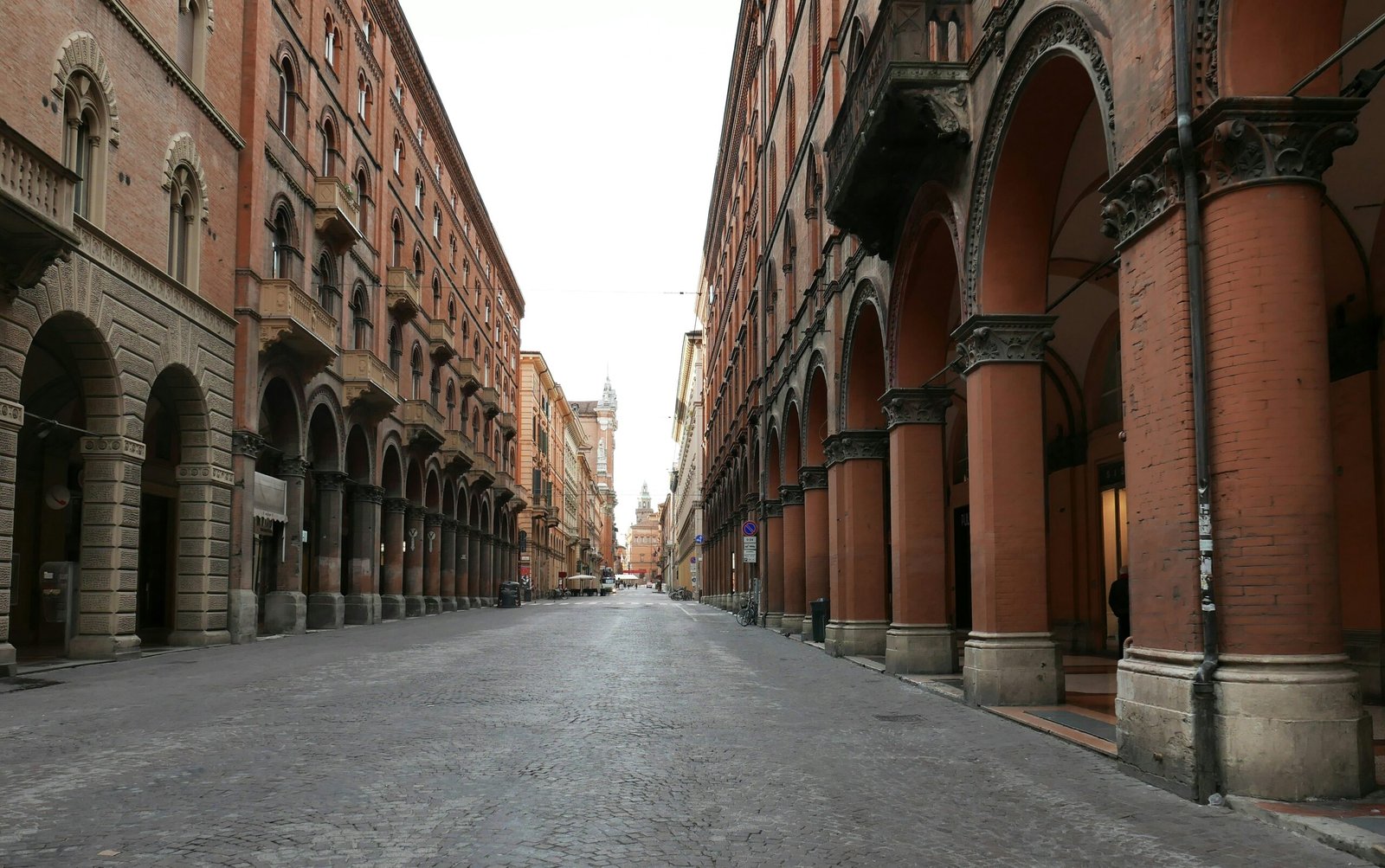
Bologna has about 62 kilometers (38 miles) of porticoes, the roofed arcades that line its streets (Bologna Welcome). UNESCO did not list all 62 kilometers one by one. The World Heritage property, inscribed in 2021, is a serial site of twelve component parts, each an ensemble of porticoes and the built area around it, dating from the 12th century to the present (UNESCO).
For photographers and walkers they offer covered streets, repeating arches and changing light. This guide covers five places that show very different sides of the portico: the long walk to San Luca, the medieval timber of Casa Isolani, the formal Pavaglione, the painted portico on Piazza Cavour and the airy four-sided portico of Santa Maria dei Servi.
Why Does Bologna Have Porticoes? A Brief History
A common explanation is that the medieval university, traditionally dated to 1088, brought a flood of students and a need for more housing. Owners extended their upper floors out over the street on wooden beams, and the covered walkway underneath became the portico.
The city then regulated it. In 1288 the municipality made porticoes mandatory for every new building, with a minimum height of 2.66 meters, enough for a man on horseback to pass underneath (Bologna Welcome).
The result is not one unbroken roof across the city. Squares and crossings interrupt it, and the porticoes themselves range from medieval timber to later stone, brick and painted arcades. That variety is what makes them worth comparing.
Five Bologna Porticoes Worth Visiting
1. Portico di San Luca: The Longest Walk
Location: From Porta Saragozza to the Sanctuary of the Madonna di San Luca on Colle della Guardia
Length: About 3.8 km (2.4 miles), the longest portico in the world (Bologna Welcome)
Arches: Traditionally said to be 666
Entry: Free to walk
San Luca Express: €15 full price per person (Bologna Welcome)
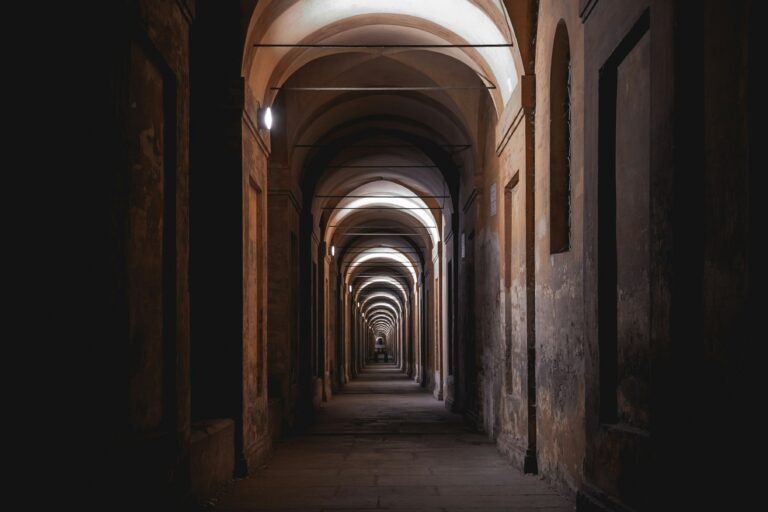
San Luca is the portico to choose when you want scale. The covered route climbs from the Saragozza gate to the sanctuary on the hill above the city.
The legend: The 666 arches are said to represent the serpent, the devil, crushed by the Madonna at the top. Treat the number as a tradition rather than a survey result, since the exact total depends on what is counted.
How long it takes: Porta Saragozza is about 16 minutes on foot from Piazza Maggiore. From the gate to the sanctuary our pedestrian routing gives about 57 minutes without stops, or roughly 75 minutes from Piazza Maggiore. Allow more if you photograph or rest.
Photography tip: The strongest feature here is repetition. Where the portico curves around the hillside, use a longer focal length, such as the 2x or 3x lens on a phone, and stand at the outer edge. Compressing the arches makes their changing height and direction easier to see in one frame.
Practical notes:
- The climb is steep in sections, so wear shoes with grip
- The sanctuary is open for visits, but hours vary by season and service, so check bolognawelcome.com before you go
- On a clear day the sanctuary gives wide views over Bologna and the plain beyond
Walking the portico is one of the best free activities in Bologna:
Bologna on a Budget: free activities and the best savings across the city
Prefer not to walk uphill? The official San Luca Express costs €15 for a full-price ticket. The offer below is a separate GetYourGuide package that combines the train with a food tasting, so compare what each includes rather than treating the two prices as the same product.
2. Casa Isolani: Medieval Wood on Strada Maggiore
Location: Strada Maggiore 19
Entry: Free (public street)
Most of Bologna’s porticoes were later rebuilt in stone and brick. Casa Isolani keeps a wooden structure from the 13th century, the beginning of the portico period, and at more than nine meters it is one of the tallest in the city (Bologna Portici project).
Photography tip: Stand underneath, close to one of the supports, and aim upward along the wood. A low angle shows how different this structure is from the stone and brick porticoes elsewhere, without needing a wide city view.
The three arrows: Look up at the underside of the portico and you will see arrows driven into the wood. A popular story says that three assassins sent to kill a nobleman were so distracted by a woman at an upstairs window that they fired their crossbows into the ceiling instead.
The documented explanation is different. The city’s heritage project says the facade is the result of a 19th-century restoration by Raffaele Faccioli, during which the three arrows were driven in as a joke. Two remain today, and two brick pillars were added beside the original wooden structure for safety (Bologna Portici project). The story is folklore; the arrows are a later addition.
For more Bologna secrets most tourists walk straight past:
5 Hidden Gems in Bologna: the underground canals, free viewpoints and unusual museums most visitors never find
If you prefer to explore central Bologna with a guide:
3. Portico del Pavaglione: The Grand City-Center Arcade
Location: Alongside Piazza Maggiore and Piazza Galvani
Entry: Free (public street)
The Pavaglione runs beside the Archiginnasio and close to the Basilica di San Petronio. Its name comes from the old word for pavilion, which referred to the silk cocoon market held here from the 16th century. The Palazzo dei Banchi facade that gives the portico its present look dates from 1565 to 1568 (Bologna Welcome).
It makes a useful contrast with Casa Isolani: instead of exposed medieval timber, you get a broad, formal arcade beside some of the most prominent civic and university buildings in the center. The streets around it lead toward the shopping area, if you want to continue.
Photography tip: Use the length of the arcade rather than one arch. Stand toward one end and let the columns repeat as a frame, with pedestrians giving scale.
The Archiginnasio, the original university building with its Anatomical Theatre, is directly adjacent, so the two combine naturally:
Bologna Museums Guide: includes the Archiginnasio Anatomical Theatre
4. Piazza Cavour: The Painted Portico
Location: Banca d’Italia building on Piazza Cavour, reached along Via Farini
Entry: Free (public street)
The most specific place to see a painted portico ceiling in this district is the one at the Banca d’Italia. The city’s heritage project calls it the only urban portico in Bologna entirely frescoed according to one coherent iconographic program. The work is by Gaetano Lodi, who chose grotesques, a genre associated with Raphael, for a building whose construction began in 1861 (Bologna Portici project).
That makes it more precise than treating all of Via Farini as one frescoed arcade, and it is a good example of how different the five stops are.
Photography tip: Point the camera along the ceiling rather than straight across the street. A standard or moderately wide lens keeps both the painted surface and the repeating lines of the arcade in one frame.
Check before you go: The municipal heritage site describes the building as currently undergoing a major restoration. Look on site for scaffolding or closures before you plan a photograph here.
5. Santa Maria dei Servi: The Airy Four-Sided Portico
Location: Strada Maggiore 43
Entry: Free (public street; the church is free to enter)
Santa Maria dei Servi is preceded by what Bologna Welcome calls an airy four-sided portico, begun in 1393 and finished between the 16th and 19th centuries. The same page points to the lightness of the columns as a feature of the church and its portico (Bologna Welcome).
After the weight of the other four stops, this is the one that feels open: a portico that wraps around a space rather than lining a street.
Photography tip: Work from a corner rather than the middle. From there two sides of the portico can enter the frame at once, which makes its four-sided layout much easier to read.
Pairing note: Casa Isolani is on the same street, Strada Maggiore, so a walk along it from the Piazza Maggiore end combines both porticoes.
Practical Tips for Walking the Porticoes
Wear shoes with grip. Polished stone can be slippery after rain. You do not need hiking footwear for the central porticoes, but smooth soles are a poor choice on a wet day.
Watch for bicycles. You may meet cyclists under some porticoes. Stay alert, follow any signs, and walk your own bicycle through busy covered sections.
Do not count on continuous shelter. The porticoes cover long stretches of the center, but crossings and squares are open. Rain is easier here than in many cities, but an umbrella can still help.
Choose your light by the effect you want. Low side light emphasizes repeating arches, and soft or overcast light helps with painted ceilings. The direction and strength of light change through the year, so there is no single best hour.
Free or cheap: Walking the porticoes costs nothing. The San Luca Express is the one optional paid transport, at €15 full price.
Frequently Asked Questions
What are the UNESCO porticoes of Bologna?
Bologna has about 62 km of porticoes. UNESCO did not list all of them one by one: the World Heritage property inscribed in 2021 is made up of twelve component parts, each an ensemble of porticoes and the built area around it, dating from the 12th century to the present.
How long is the Portico di San Luca?
The Portico di San Luca is about 3.8 km long, and Bologna Welcome calls it the longest portico in the world. It is traditionally said to have 666 arches. It runs from Porta Saragozza to the Sanctuary of the Madonna di San Luca. Our pedestrian routing gives about 57 minutes from the gate to the sanctuary without stops.
Is walking the porticoes in Bologna free?
Yes. Walking the five porticoes in this guide costs nothing. The San Luca Express is optional paid transport, with a full-price ticket at €15 per person on Bologna Welcome’s page.
Which portico is best for photography in Bologna?
It depends on the architecture you want to photograph. San Luca gives you long sequences of repeating arches. Casa Isolani is the stop for medieval timber. The Banca d’Italia portico on Piazza Cavour is the one with a fully painted ceiling, and Santa Maria dei Servi has an airy four-sided layout that is easiest to read from a corner.
When is the best time to walk the Bologna porticoes?
The central porticoes work in any season because they are covered. For San Luca, weather matters more because of the uphill walk. For photography, choose your time by the kind of light you want: low side light emphasizes repeating arches, while soft or overcast light helps with painted ceilings.
What shoes should I wear to walk the Bologna porticoes?
Normal walking shoes with good grip are enough for the central stops. Polished stone can be slippery after rain, so smooth leather soles are a poor choice on a wet day, and San Luca is easier in proper walking shoes.
Plan Your Bologna Visit
- Where to Stay in Bologna: neighborhoods within easy reach of the porticoes
- 2 Days in Bologna: The Perfect Weekend Itinerary: includes portico walk routes
- 5 Hidden Gems in Bologna: more places most tourists miss
- Bologna on a Budget: every portico in this guide is free to visit
- Bologna Museums Guide: the Archiginnasio Anatomical Theatre, directly beside the Pavaglione
More on what to see and do across the city is collected in Things to Do.