Bologna to Venice Day Trip: Train, Costs & One-Day Plan (2026)
Venice is a practical day trip from Bologna. Italo currently lists direct high-speed trains from Bologna Centrale to Venezia Santa Lucia in 1 hour 19 minutes, with fares from €11.90 each way. For trips after 26 July 2026, the Venice Access Fee is no longer in effect, and no 2027 scheme has yet been approved.
Your Bologna base: Where to Stay in Bologna: best neighborhoods and hotels for day trip access
Bologna to Venice by Train
The train is the most practical way to make this day trip. Venezia Santa Lucia station is inside the historic city, directly beside the Grand Canal, so you do not need a transfer from Mestre.
| Detail | Current Planning Figure |
|---|---|
| Route | Bologna Centrale to Venezia Santa Lucia |
| Fastest published Italo journey | 1 hour 19 minutes |
| Published Italo fare | From €11.90 each way |
| Best station for a day trip | Venezia Santa Lucia |
High-speed fares vary by departure and fare type. Book early when your dates are fixed, but compare the actual train times before paying. You can book through Omio or directly with Italo. Omio adds a service fee, which it shows before you pay.
Do not book Venezia Mestre by mistake if your aim is the historic center. Santa Lucia puts you beside the Grand Canal as soon as you leave the station.
For the wider comparison of rail day trips from Bologna, see Best Day Trips from Bologna by Train: journey times and current prices.
Venice Access Fee in 2026: What Applies Now
There is currently no Venice Access Fee to pay. The City of Venice ended the 2026 trial on 26 July, and visits from 27 July onward require neither payment nor an exemption.
The 2026 trial ran on 60 dates between 3 April and 26 July. On those dates, the fee was €5 when paid by the fourth-last day before entry and €10 during the final three days. The charging period was 08:30 to 16:00.
One earlier planning shortcut is important to correct. Entering the historic city before 08:30 did not remove the fee if you remained there during the charging period.
Venice has not yet approved the rules for 2027. If your trip is next year, check the official Venice Access Fee portal before booking around any proposed fee dates.
Which Day Is Best for a Venice Day Trip?
Wednesday to Saturday is the easiest window for a first-time itinerary that combines the Rialto fish market, St Mark’s Basilica, and the Peggy Guggenheim Collection.
The reason is practical. Rialto’s fish market operates Tuesday to Saturday from 07:00 to 14:00. St Mark’s Basilica opens to visitors from 09:30 Monday to Saturday, but on Sundays and public holidays the Basilica itself opens to visitors at 14:00. The Peggy Guggenheim Collection is closed on Tuesdays.
That does not make other days bad. It simply changes what fits neatly into one day.
For broader seasonal planning from your Bologna base, see Best Time to Visit Bologna: seasonal guidance for day trips.
Getting Around Venice by Vaporetto
Walking covers much of central Venice, but the vaporetto is useful for the Grand Canal and longer cross-city moves.
Current ACTV fares are:
- 75-minute ticket: €9.50
- 24-hour pass: €25
- 48-hour pass: €35
A 24-hour pass becomes cheaper than separate tickets when you would otherwise buy three €9.50 rides. If you plan only one or two boat journeys, single tickets cost less.
Line 1 is the slower Grand Canal route and works well as sightseeing as well as transport. Line 2 is useful for faster movement on parts of the same corridor. Routes and seasonal timetables change, so check the official Venezia Unica transport page before travel.
For a first Venice day trip, leave Murano and Burano for another visit unless the islands are your main priority. Reaching them takes a meaningful share of a single day.
What to See in Venice in One Day
One day is enough for a focused first visit. It is not enough for every major museum, church, island, and neighborhood.
1. Ride the Grand Canal
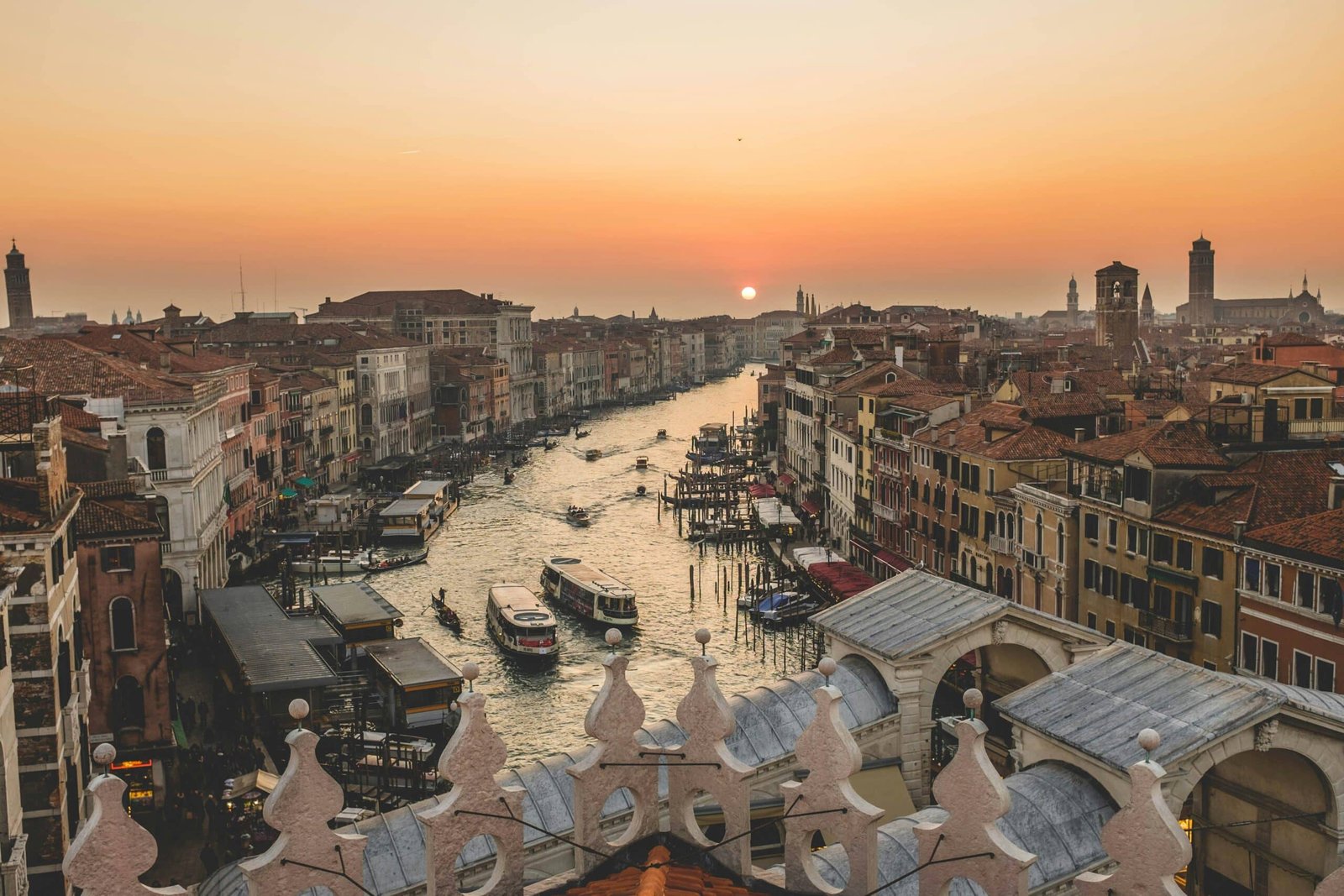
If you arrive early enough, start with Line 1 from Ferrovia, the vaporetto stop outside Santa Lucia. The ride gives you a water-level view of the Grand Canal before the day becomes museum-heavy.
Allow roughly 40–45 minutes to reach the San Marco area on Line 1, depending on the current timetable.
2. St Mark’s Basilica
Time needed: about 45–60 minutes
Standard Basilica admission: €10
Bell Tower: €15
Visitor hours: 09:30–17:15 Monday to Saturday; Basilica visitor access starts at 14:00 on Sundays and public holidays
St Mark’s is the major church on Piazza San Marco and one of the places where advance planning saves the most time. The official ticket system uses named tickets and timed entry.
The basic Basilica ticket costs €10. Tickets including the Pala d’Oro or Museum and Horses Loggia cost more. The complete Basilica ticket is €30.
Book through the official St Mark’s Basilica ticket site if you only need admission. If you would rather book through a tour operator, the option below is an alternative; check the listing for the exact entry type and inclusions.
Large bags need planning. The Basilica does not admit backpacks or luggage larger than 40 × 30 × 20 cm, and trolley bags are not allowed.
3. The Doge’s Palace
Location: beside St Mark’s Basilica
Time needed: about 1.5–2 hours
Standard St Mark’s Square Museums ticket: €35
Advance online price: €30 when purchased at least 30 days before the visit
The Doge’s Palace is the former seat of the doge and the government of the Venetian Republic. The standard route includes the institutional rooms, the Bridge of Sighs, and the prison area.
The €35 ticket also covers the Correr Museum, National Archaeological Museum, and Monumental Rooms of the Marciana National Library. The €30 online price is not a general advance-purchase discount. It applies only when you buy at least 30 days before the visit.
Check current hours and tickets on the official Doge’s Palace site.
4. Rialto Bridge and Market
Rialto Bridge: free
Fruit and vegetable market: Monday to Saturday, 07:00–20:00
Fish market: Tuesday to Saturday, 07:00–14:00
Rialto is useful because the bridge, market, and lunch options sit in one compact area. If the fish market matters to you, reach it before 14:00 and avoid Sunday or Monday.
The bridge itself is always the main draw for many first-time visitors. Give the market 20–30 minutes unless food shopping is a priority.
5. Pick One Neighborhood
After San Marco and Rialto, choose one area rather than trying to cross the whole city repeatedly.
Dorsoduro works well if modern art matters. The Peggy Guggenheim Collection costs €17, opens 10:00–18:00, and closes on Tuesdays.
Cannaregio works well if you want to finish nearer Santa Lucia. It also lets you pass through the historic Jewish Ghetto before returning to the station.
You do not need both. One is enough.
A Realistic One-Day Venice Itinerary
This sequence assumes you choose a train that reaches Santa Lucia around 08:30. Treat the times as a planning framework, not a railway timetable.
| Time | Plan | Current Cost |
|---|---|---|
| 08:30 | Arrive at Venezia Santa Lucia | Train fare varies |
| 08:45 | Line 1 toward San Marco | €9.50 single or pass |
| 09:30 | Piazza San Marco | Free |
| 09:45 | St Mark’s Basilica | €10 |
| 10:45 | Campanile, optional | €15 |
| 11:30 | Doge’s Palace | €35 standard |
| 13:30 | Walk toward Rialto | Free |
| 13:50 | Rialto Market and bridge | Free |
| 14:30 | Lunch in the Rialto area | Varies |
| 15:30 | Cannaregio or Dorsoduro | Free unless visiting a museum |
| 17:30 | Start back toward Santa Lucia | Varies |
| Evening | High-speed train to Bologna | Train fare varies |
On a Sunday or public holiday, move the Basilica to after 14:00 because visitor access to the church itself starts later.
Art-Focused Alternative
Replace the Doge’s Palace with the Peggy Guggenheim Collection if twentieth-century art matters more to you than Venetian political history. Admission is €17 and the museum is closed on Tuesdays.
Where to Eat on a Venice Day Trip
A full restaurant lunch can consume a large part of a short day. Bacari, Venice’s traditional wine bars, are easier to fit around sightseeing because you can stop for cicchetti without committing to a long meal.
The Rialto Market area is convenient between San Marco and the station. Cannaregio, especially around Fondamenta della Misericordia, is another practical choice if you eat later in the day.
Check displayed prices before ordering, particularly around Piazza San Marco. The goal is not to find a street with no visitors. It is to choose a place with clear prices and a menu that fits the time you have.
How Much Does a Bologna to Venice Day Trip Cost?
Using current published minimums, a day with two €11.90 Italo tickets, a €25 ACTV pass, €10 Basilica admission, and the €35 Doge’s Palace ticket starts at €93.80 per person before food.
Add the €15 Campanile and the same example reaches €108.80 before food. Actual train fares may be higher because the lowest fares are limited and departure-specific.
You can spend less by walking more, skipping paid sights, or using one or two single vaporetto tickets instead of the day pass.
Guided or Self-Guided?
Self-guided works well for a first Venice day trip if you book any timed attractions before leaving Bologna. The station, Grand Canal, Rialto, and San Marco form a manageable route.
A guided visit makes more sense when the historical context inside St Mark’s Basilica or the Doge’s Palace matters more than flexibility. It can also simplify ticket handling, but check exactly what a tour includes before paying.
If you want a guide, book the tour in Venice itself. You still take the train from Bologna, and the tour combines St Mark’s Basilica, the Doge’s Palace and a gondola ride. If you only want to see the basilica interior, book a timed-entry ticket instead.
Practical Tips
Book the train early once your date is fixed. High-speed fares vary. Compare direct departures and fares on Omio rather than relying on a fixed average fare.
Check the Access Fee portal for future years. The 2026 trial ended on 26 July, and no fee applies for the rest of 2026 under the current rules. For a 2027 visit, check cda.veneziaunica.it before travel.
Buy the 24-hour ACTV pass only if you expect at least three paid rides. Two standard tickets cost €19, while three cost €28.50.
Check your Basilica bag size. Bags larger than 40 × 30 × 20 cm and trolley bags are not admitted.
Allow more walking time than the map suggests. Canals limit crossing points, and bridges add repeated steps.
Do not build a first-time day around both the historic center and the outer islands. That usually turns a focused day into a transport-heavy one.
Frequently Asked Questions
How Long Is the Train from Bologna to Venice?
Italo currently publishes a fastest Bologna Centrale to Venezia Santa Lucia journey of 1 hour 19 minutes. Other direct trains take longer depending on the departure. Check your date on Omio before booking.
Does Venice Charge an Entry Fee for Day Trippers?
Not for visits after 26 July 2026. The City of Venice states that the 2026 trial has ended, so no payment or exemption is currently required. A 2027 scheme has not yet been approved. Check the official Access Fee portal for future updates.
Is Venice Worth a Day Trip from Bologna?
Yes, if you accept that one day is a highlights trip. A direct high-speed train of about 1 hour 20 minutes makes San Marco, the Doge’s Palace, Rialto, and one neighborhood realistic without changing hotels.
What Is the Best Day for a Venice Day Trip?
Wednesday to Saturday is the easiest fit for the itinerary in this guide. The Rialto fish market is open Tuesday to Saturday, the Basilica has morning visitor hours Monday to Saturday, and the Peggy Guggenheim Collection is closed on Tuesdays.
How Much Does a Day Trip from Bologna to Venice Cost?
A current example with the lowest published Italo fare in both directions, an ACTV 24-hour pass, St Mark’s Basilica, and the standard Doge’s Palace ticket starts at €93.80 before food. Train fares can be higher, so treat that as a floor rather than an average.
How Do I Reduce Queuing at St Mark’s Basilica and the Doge’s Palace?
Book timed admission before the trip and build the day around those slots. St Mark’s official tickets are named and timed. For the Doge’s Palace, advance booking gives you a fixed plan even when the €30 online rate is unavailable because you are inside the 30-day window.
Plan Your Day Trip
- Best Day Trips from Bologna by Train: all 9 destinations with logistics
- The 3 Best Day Trips from Bologna: the shortlist
- Bologna to Modena Day Trip: Ferrari and balsamic vinegar
- Bologna to Parma Day Trip: Prosciutto and Parmigiano
- Bologna to Ravenna Day Trip: Byzantine mosaics
- Where to Stay in Bologna: your base for regional day trips
- Best Time to Visit Bologna: seasonal day trip planning
- Bologna Trip Cost 2026: budget breakdown including day trips
- Bologna to Ferrara Day Trip: a shorter Renaissance-city trip
Every destination within easy reach of Bologna is collected in Day Trips.