Bologna to Ravenna Day Trip: Train, Mosaics & Tickets (2026)
Ravenna is one of the easiest major cultural day trips from Bologna. Direct regional trains usually take about 1 hour to 1 hour 15 minutes on many services, and the five central mosaic sites can fit into one full day.
The main planning step is the monument ticket. Ravenna’s official tourism site gives priority to prebooked tickets and states that same-day entry is subject to availability, so book online before traveling when your date is fixed.
Ravenna has eight UNESCO World Heritage monuments dating from the 5th and 6th centuries. Five central sites share one ticket system, while the other three sit outside that circuit.
Your Bologna base: Where to Stay in Bologna: best neighborhoods and hotels
Getting From Bologna to Ravenna by Train
The train is the simplest option for most day trippers. Current timetables show many direct regional services taking roughly 1 hour to 1 hour 15 minutes, although the exact pattern changes by date.
Route: Bologna Centrale → Ravenna station
Journey time: about 1 hour to 1 hour 15 minutes on many direct services
Frequency: broadly hourly, with some longer gaps and extra services at busier times
Price: about €8.50 one-way on regional services
Buy regional tickets on Omio, through the Trenitalia app or at the station. Omio adds a service fee, which it shows before you pay. Check the timetable for your exact travel date rather than planning around one fixed departure.
From Ravenna station, allow around 10 minutes to reach Piazza del Popolo. The principal mosaic sites are clustered around the historic center and can be covered on foot.
A bicycle is optional rather than necessary. Ravenna Turismo lists Velostazione Ve.Ra at Piazzale Farini 1, beside the railway station, with other rental options elsewhere in the city.
For other rail trips from Bologna, see Best Day Trips from Bologna by Train: journey times and prices.
Ravenna Mosaic Tickets in 2026
Ravenna uses three fixed combination tickets for its five central church-run mosaic sites. These are not passes where you choose any two or four monuments.
| Ticket | Sites Included | Adult | Other Current Rates |
|---|---|---|---|
| 2-monument itinerary | San Vitale + Sant’Apollinare Nuovo | €10.50 | €9.50 students and groups over 20; ages 0–10 free |
| 4-monument itinerary | Above + Galla Placidia + Neonian Baptistery | €12.50 | €11.50 students/groups; €2 ages 6–10; ages 0–5 free |
| 5-monument itinerary | Above + Archiepiscopal Museum and St Andrew’s Chapel | €14.50 | €13.50 students/groups; €4 ages 6–10; ages 0–5 free |
Other concessions also apply. Check your eligibility when booking.
All three tickets are valid for seven days and allow one entry to each included monument.
You can book through ravennamosaici.it. Tickets can also be bought at monument ticket offices on the day, but prebooked and presale visitors receive priority and same-day entry remains subject to availability.
Do You Need to Book Galla Placidia in Advance?
Book the monument itinerary online when your date is fixed. This is safer than relying on remaining same-day availability.
Older advice often treats Galla Placidia as the only monument requiring a separate paid reservation. The current official 2026 information instead directs visitors to the general booking system and does not list a separate Galla Placidia booking supplement.
Follow the entry time and instructions shown on your booking confirmation.
Which Ravenna UNESCO Sites Fit Into One Day?
Ravenna has eight UNESCO World Heritage monuments, but five form the most practical central day-trip route:
- Mausoleum of Galla Placidia
- Basilica di San Vitale
- Neonian Baptistery
- Archiepiscopal Museum and St Andrew’s Chapel
- Basilica di Sant’Apollinare Nuovo
The other three UNESCO monuments are the Arian Baptistery, Mausoleum of Theodoric and Basilica of Sant’Apollinare in Classe.
You can add more if you have time, but trying to treat all eight as equal stops makes the day unnecessarily rushed. Sant’Apollinare in Classe also sits outside the central cluster.
1. Mausoleum of Galla Placidia
Location: Via San Vitale 17
Ticket: Included in the 4- and 5-monument itineraries
2026 high-season hours: 9:00 AM–7:00 PM from March 8 to November 1
Galla Placidia commissioned this small cruciform building during the first half of the 5th century. Although it was intended as a mausoleum, the official history states that Galla died in Rome in 450 and was buried there.
Inside, the visual focus is the dark blue mosaic vault covered with golden stars. Other major details include Christ as the Good Shepherd, floral and geometric decoration and the light filtering through alabaster windows.
This is the stop to plan around first. If your booking gives you a specific entry time, build the beginning of your route around it.
2. Basilica di San Vitale
Location: Via Argentario 22
Ticket: Included in all three itineraries
2026 high-season hours: 9:00 AM–7:00 PM from March 8 to November 1
San Vitale gives you a much larger interior after the compact Galla Placidia. Its octagonal plan and apse mosaics belong to the period of Emperor Justinian.
The best-known panels show Justinian with his court and Empress Theodora with her attendants. Step close enough to see how the images are constructed from individual tesserae, then move back to read each panel as a whole.
Galla Placidia and San Vitale are beside each other, so visit them back to back.
3. Neonian Baptistery
Location: Piazza Duomo 1
Ticket: Included in the 4- and 5-monument itineraries
The Neonian Baptistery dates to the beginning of the 5th century and is one of Ravenna’s oldest surviving early Christian monuments.
Its dome centers on the Baptism of Christ, surrounded by the twelve apostles. Below them, the decoration shifts to architectural motifs including thrones and altars.
This is a compact stop. It also pairs naturally with the Archiepiscopal Museum, a few minutes away.
4. Archiepiscopal Museum and St Andrew’s Chapel
Location: Piazza Arcivescovado 1
Ticket: Included in the 5-monument itinerary
The museum’s main draw for this route is St Andrew’s Chapel, the private episcopal oratory decorated with early Christian mosaics.
Its image of Christ dressed as a warrior creates a marked contrast with the gentler imagery elsewhere in Ravenna. The museum also holds the ivory throne associated with Bishop Maximian, decorated with scenes from the lives of Christ and Joseph.
For an adult, the 5-monument ticket costs €2 more than the 4-monument version. If you have time for this stop, that small difference makes the five-site itinerary the more useful choice.
5. Basilica di Sant’Apollinare Nuovo
Location: Via di Roma
Ticket: Included in all three itineraries
Theodoric had Sant’Apollinare Nuovo built around the end of the 5th and beginning of the 6th century as his Arian palatine church.
Two long processions run along the nave. One shows female martyrs moving toward the Madonna and Child, while the other shows male martyrs approaching Christ.
Look closely at the palace scene. After Ravenna came under Byzantine control, earlier figures associated with Theodoric’s court were removed from the imagery. Traces, including hands, remain visible.
Dante’s Tomb
Dante Alighieri spent his final years in Ravenna and died here in 1321. His remains are still kept in the small mausoleum near the Basilica of San Francesco.
Location: Via Dante Alighieri 9
Entry: Free
April 1–October 31: 10:00 AM–7:00 PM
November 1–March 31: 10:00 AM–6:00 PM
December 25: Closed
Florence repeatedly sought the return of Dante’s remains after his exile. Today a votive lamp inside the tomb burns oil donated by Tuscany, and Florence sends oil ceremonially on the second Sunday of September each year.
You only need around 15–20 minutes here. It fits easily between the Archiepiscopal Museum and Sant’Apollinare Nuovo.
Visitors with physical mobility limitations should note that Ravenna Turismo lists the tomb as viewable only from outside rather than physically accessible inside.
Where to Eat in Ravenna
For a day built around monuments, a quick Romagnola lunch makes more sense than a long restaurant stop.
Piadina is the obvious local option. Ravenna Turismo lists dedicated piadinerie around the city, with common fillings including squacquerone cheese, cured meats and rocket.
Mercato Coperto, on Piazza Andrea Costa, is another practical central stop. The covered market combines food shops and places to eat within a short walk of Piazza del Popolo.
Ca’ de Vèn, at Via Corrado Ricci 24, is a historic enoteca in a 15th-century building serving Romagnola food and regional wines. Its current published hours are Tuesday–Sunday, 11:00 AM–2:30 PM and 6:30 PM–10:00 PM, with Monday closed. Summer Sunday closures can apply, so check before going.
Keep lunch reasonably short if you want all five ticket sites and Dante’s Tomb in the same day.
Guided or Self-Guided?
Ravenna works well as a self-guided day trip. The center is walkable, the main ticket system covers five important sites and the route does not require a car.
A guided tour can still add useful historical context. Our pick is a guided tour of Ravenna’s UNESCO monuments and mosaics that starts in Ravenna itself. You travel from Bologna by train, and the listing gives the meeting point and which sites are included.
Sample Bologna to Ravenna Day Trip Itinerary
Do not build the day around one permanent train schedule. Choose your trains first, then place the monument visits around your booked entries.
| Approx. Time | Activity | Cost |
|---|---|---|
| 08:00–09:30 | Direct train from Bologna Centrale | ~€8.50 |
| 09:30–09:45 | Walk into the historic center | Free |
| 10:00 | Mausoleum of Galla Placidia | Included |
| 10:30 | Basilica di San Vitale | Included |
| 11:30 | Neonian Baptistery | Included |
| 12:15 | Piadina or quick lunch | Varies |
| 13:15 | Archiepiscopal Museum + St Andrew’s Chapel | Included |
| 14:15 | Dante’s Tomb | Free |
| 14:45 | Sant’Apollinare Nuovo | Included |
| 16:00 | Piazza del Popolo and coffee | Varies |
| From 17:00 | Walk to station and return to Bologna | ~€8.50 |
The confirmed adult monument cost for this route is €14.50 with the five-monument itinerary. Add the return train fare, lunch and drinks to calculate your full budget.
Practical Tips for a Ravenna Day Trip
Book the monuments before travel. Online ticket holders receive priority, while same-day availability is not guaranteed. Use ravennamosaici.it once your date is fixed.
The combination ticket lasts seven days. This matters if you decide to stay overnight, because you do not need to complete all included sites on the first day.
Check seasonal opening hours. Several monument pages use different schedules outside the March to early November period.
A bicycle is optional. For the five central ticket sites, walking is sufficient. If you want a bike, Velostazione Ve.Ra is beside Ravenna station at Piazzale Farini 1.
Consider Marina di Ravenna in summer. Start Romagna’s Freccia Blu runs from Ravenna railway station toward Marina di Ravenna every 40 minutes during the summer service, reaching the seaside in about 15 minutes. Treat the beach as an alternative afternoon plan rather than trying to combine it with every central monument.
Ravenna or Venice From Bologna?
Ravenna and Venice serve different day-trip priorities.
Choose Ravenna if you want a focused day around late Roman, early Christian and Byzantine art. Its central route is compact, and the five-site adult monument ticket costs €14.50.
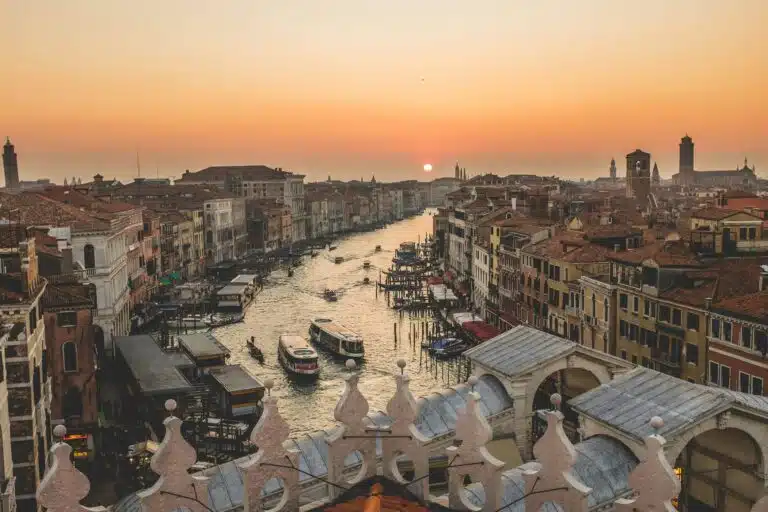
Choose Venice if you want a much broader city experience built around canals, major architecture, neighborhoods and the lagoon.
Seeing one does not make the other redundant. If Byzantine and early Christian art is a priority, Ravenna offers the more concentrated visit.
For the alternative route, see Bologna to Venice Day Trip: train and itinerary guide.
Frequently Asked Questions
How Long Is the Train From Bologna to Ravenna?
Many direct regional services take about 1 hour to 1 hour 15 minutes on the Bologna Centrale to Ravenna line. Exact departures and journey times vary by date, so check Trenitalia before travel. The current one-way regional fare is about €8.50.
Do I Need to Book the Ravenna Mosaics in Advance?
Booking online is the safer option when your date is fixed. Ravenna’s official tourism information states that prebooked and presale tickets receive priority and same-day sales are subject to availability. Book through ravennamosaici.it.
How Much Is the Ravenna Five-Site Ticket?
The 2026 adult price is €14.50. It covers San Vitale, Sant’Apollinare Nuovo, Galla Placidia, the Neonian Baptistery, and the Archiepiscopal Museum with St Andrew’s Chapel. The ticket is valid for seven days and permits one entry to each included monument. Buy it through ravennamosaici.it or at participating monument ticket offices, subject to availability.
Is Dante Buried in Ravenna?
Yes. Dante Alighieri died in Ravenna in 1321, and his remains are kept in the mausoleum at Via Dante Alighieri 9. Entry is free.
Is Ravenna Worth a Day Trip From Bologna?
Yes, particularly if early Christian history, late Roman history or mosaic art interests you. Direct regional trains make the journey practical, and five central mosaic sites plus Dante’s Tomb fit into a full day.
How Long Do You Need in Ravenna?
Allow around 6–7 hours in Ravenna for the five central ticket sites, Dante’s Tomb, walking and lunch. Add more time if you want the Arian Baptistery, Mausoleum of Theodoric or Sant’Apollinare in Classe.
Plan Your Day Trip
- Best Day Trips from Bologna by Train: destinations, journey times and logistics
- The 3 Best Day Trips from Bologna
- Bologna to Venice Day Trip
- Bologna to Modena Day Trip
- Bologna to San Marino Day Trip
- Best Time to Visit Bologna
- Where to Stay in Bologna
- Bologna Trip Cost 2026
- Bologna to Ferrara Day Trip: another UNESCO city by regional train
Every destination within easy reach of Bologna is collected in Day Trips.