3 Days in Bologna: A Practical Long Weekend Itinerary (2026)
Three days in Bologna gives you two full days in the city and a flexible third day for Modena. This itinerary keeps Day 1 in the historic center, uses Day 2 for San Luca and a cooking class, and gives you two workable Modena options for Day 3.
If you have less time, use the Bologna in One Day: The Perfect Layover & Stopover Itinerary or the 2 Days in Bologna: The Perfect Weekend Itinerary. If you are still deciding how long to stay, read How Many Days in Bologna? An Honest Breakdown for Every Type of Traveler.
For this route, a central base reduces backtracking. Start with Where to Stay in Bologna: Best Neighborhoods and Hotels.
3 Days in Bologna at a Glance
| Day | Main Plan | Evening |
|---|---|---|
| Day 1 | Quadrilatero, Piazza Maggiore, Two Towers area, Archiginnasio, Santo Stefano | Gelato, aperitivo, traditional dinner |
| Day 2 | San Luca portico walk, one museum, market shopping | Bologna cooking class |
| Day 3 | Modena: choose a city and balsamic route or a two-museum Ferrari route | Final dinner in Bologna |
Before You Arrive: What to Book
Book three things before the trip if they matter to you: the cooking class, the Archiginnasio Anatomical Theatre, and any timed Modena visits. The Archiginnasio now requires online booking for the Anatomical Theatre and Stabat Mater visit. Current visitor options are €10 with an audio guide or €12 with a guided tour.
For Modena, the Municipal Balsamic Vinegar Factory requires advance booking, and the English tour is currently scheduled only on Saturdays at 14:30. Ferrari also recommends advance booking for its museums.
Restaurant reservations depend on the venue. Osteria dell’Orsa and Sfoglia Rina do not take reservations, while other dinner restaurants in this itinerary are better checked and booked for your actual travel dates.
For class formats and booking advice, see Best Cooking Classes in Bologna: Which Classes to Book and How Far Ahead.
Our pick: pasta, ragù & gelato classDay 1: The Historic Center on Foot
Day 1 stays compact. Most stops sit within the central street network, so you can spend more time inside the city and less time moving between neighborhoods.
Morning: Coffee, Market, and Piazza Maggiore
08:30: Coffee at a bar counter. Start with espresso and breakfast near the center. Prices vary by bar and service style, so this itinerary does not assign a fixed coffee price.
09:00: Quadrilatero Market. Walk Via Drapperie, Via Pescherie Vecchie, and Via Caprarie. This is a useful first stop for mortadella, Parmigiano Reggiano, fresh pasta, bread, and deli counters without turning breakfast into a formal meal.
For a broader introduction to local dishes and where to try them, use The Ultimate Bologna Food Guide.
10:15: Piazza Maggiore and San Petronio. Inside the Basilica di San Petronio, look for the Cassini meridian line, installed in 1655. Around local noon, sunlight entering through a small opening marks the Sun’s position on the line. This is worth timing if your morning schedule allows it.
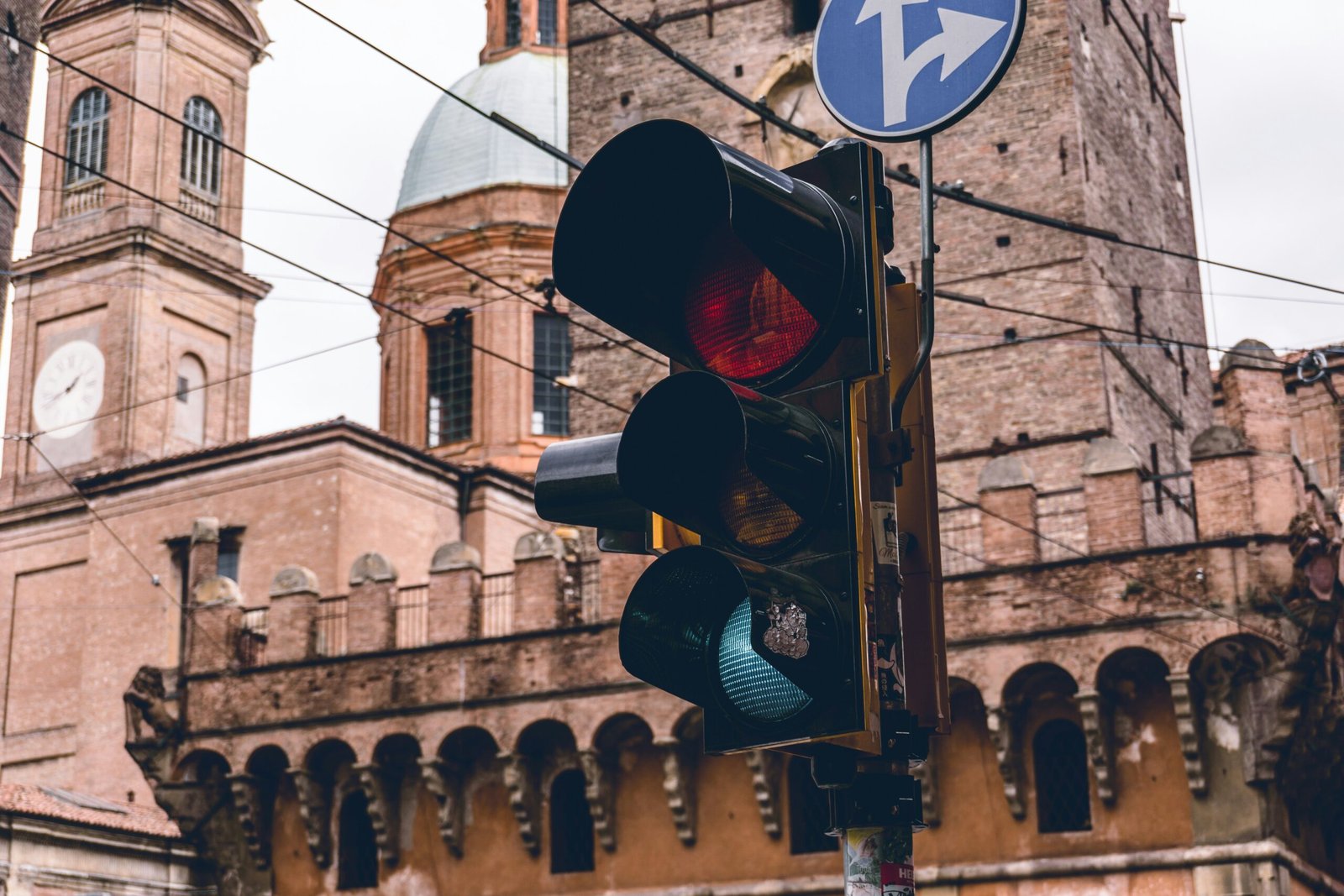
11:15: The Two Towers area. The Asinelli Tower remains closed to the public while work continues around the Garisenda, and the Garisenda is not accessible. Treat this as a street-level stop rather than planning a tower climb. See the views you can still visit while the Asinelli is closed.
From here, walk north to Via Piella for the Finestrella and the canal view.
Midday: Lunch and the Archiginnasio
12:30: Lunch at Osteria dell’Orsa. The restaurant is at Via Mentana 1, opens at 12:30, and does not accept reservations. Its menu changes, so do not plan around an old online price for one specific pasta dish.
For restaurant comparisons and the official recipe context, read the best Tagliatelle al Ragù in Bologna guide.
14:00: Archiginnasio Anatomical Theatre. The palace is at Piazza Galvani 1. Online booking is mandatory for the Anatomical Theatre visit. The current audio-guided option costs €10 and takes about 40 minutes; the guided option costs €12 and takes about 1 hour 15 minutes. The palace is closed on Sundays, so move this stop to another day if Day 1 falls on Sunday.
Afternoon: Strada Maggiore and Santo Stefano
15:30: Casa Isolani and Santo Stefano. Walk east along Strada Maggiore and stop at Casa Isolani, one of Bologna’s surviving medieval timber-portico buildings. Continue to the Santo Stefano complex, traditionally called Sette Chiese.
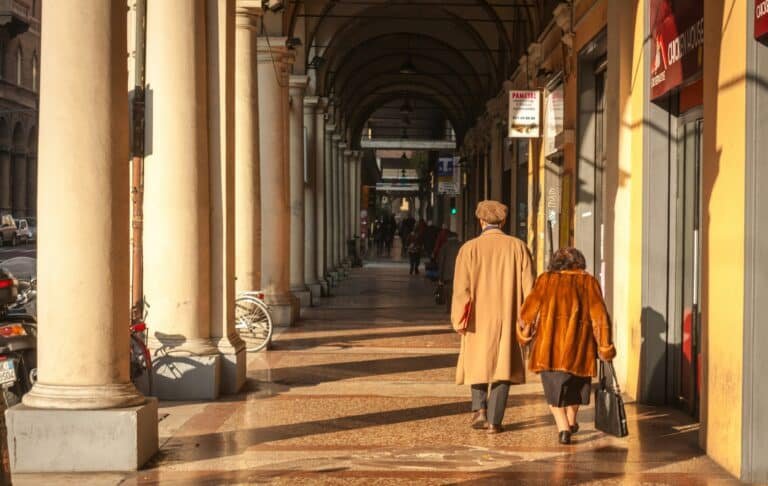
For more context on the arcades you are walking under, read The UNESCO Porticoes of Bologna: History, Photography Tips, and Five Arcades to Know.
16:30: Free exploration. Use the next hour for the university district, a café stop, or another short central walk. In warmer months, Le Serre dei Giardini Margherita can work as a park break if its seasonal program is running.
For smaller sights that fit into this gap, see 5 Hidden Gems in Bologna: Free Stops Most Visitors Walk Past.
Evening: Gelato, Aperitivo, and Dinner
17:30: Gelato at Cremeria Cavour. It is on Piazza Cavour and fits naturally between the center and an early-evening aperitivo.
Compare more gelaterie in Best Gelato in Bologna.
18:30: Aperitivo at Osteria del Sole. You may bring outside food, but you must buy your drinks from the osteria. Table reservations are possible with a minimum consumption requirement of €10 per person, although you do not need to build the stop around a reservation.
For alternatives, see The Ultimate Bologna Aperitivo Guide: Bars, Neighborhoods, and Osteria del Sole.
20:00: Dinner. Choose Caminetto d’Oro for a central traditional dinner or Trattoria Anna Maria for handmade Bolognese pasta in the university district. Check the restaurant’s opening day and reserve if your date allows it.
For another pasta-focused comparison, see Best Tortellini in Bologna: Where to Eat a Classic Bowl.
Day 2: San Luca, One Museum, and a Cooking Class
Day 2 combines Bologna’s longest walk with one museum, not two. Do not add a second museum. That keeps enough time for lunch, a break, and an evening cooking class.
Morning: The San Luca Portico Walk
08:30: Walk to Porta Saragozza. From the center, head west to the start of the San Luca route.
09:00: Walk toward the Sanctuary of San Luca. Official local sources measure the porticoed route at roughly 3.6–3.8 km depending on the starting point. It is traditionally described as having 666 arches, although the municipality notes that the exact count depends on how they are counted.
The climb becomes steeper after the Arco del Meloncello. Give yourself time at the sanctuary before walking back toward the city.
Midday: Lunch and One Museum
12:30: Lunch at Sfoglia Rina. The Bologna branch is at Via Castiglione 5/B. The restaurant currently takes orders from 11:30 to 20:00 and does not accept reservations.
14:00: Choose one museum.
Pinacoteca Nazionale is the stronger choice if you want Renaissance and Bolognese painting. The current full-price ticket is €12, and admission is free on the first Sunday of each month. It is closed on Mondays. If you plan several paid sights, see whether the Bologna Welcome Card beats single tickets.
Museo di Palazzo Poggi works better if you prefer the history of science, anatomy, maps, and university collections. The current full-price ticket is €10. It is open Tuesday to Friday from 10:00 to 16:00, and Saturday, Sunday, and public holidays from 10:00 to 18:00. It is closed on non-holiday Mondays.
An earlier version of this itinerary placed Palazzo Poggi at 15:30 with 60–90 minutes available. That no longer works on Tuesday through Friday because the museum closes at 16:00. Choose it earlier or use the Pinacoteca instead.
Late Afternoon: Market Shopping
16:00: Return to the Quadrilatero. Use this pass for food shopping rather than sightseeing. Tamburini, Paolo Atti & Figli, and Majani are convenient central names to check for packaged food and gifts. Confirm current opening hours on your travel day before building the route around one shop.
Evening: Cooking Class
Evening: Bologna cooking class. Class length, start time, menu, and setting vary by provider. Choose the format first, then build the late afternoon around the confirmed start time rather than assuming every class begins at 18:30.
The full comparison is in Best Cooking Classes in Bologna: What to Book, How Far Ahead, and What to Expect.
Day 3: Modena Day Trip
Direct Bologna Centrale to Modena trains commonly take about 20–30 minutes on current timetables. Current listings show fares from €4.50, but check the operator for your exact date because schedules and fares change.
Choose one coherent Modena route. The Acetaia Comunale’s English schedule does not fit every day, and the two Ferrari museums are about 20 km apart.
Option A: Modena Center, Lunch, and Balsamic Vinegar
This version works best when the Acetaia Comunale tour matches your day and language.
09:30: Museo Enzo Ferrari. The museum is at Via Paolo Ferrari 85, close enough to combine with central Modena before lunch.
12:00: Lunch at Trattoria Aldina. It is at Via Albinelli 40 and opens only for lunch, Monday to Saturday from 12:00 to 14:30. It does not take reservations and is closed on Sundays.
14:30: Acetaia Comunale, if your visit is on Saturday and you want an English tour. The current English tour runs on Saturdays at 14:30, costs €5, includes a tasting, and requires advance booking. Other listed public tours are in Italian.
If that schedule does not match your trip, do not force this stop into the day. Use the central Modena time for Piazza Grande and the historic center, or choose the Ferrari route below.
Option B: Both Ferrari Museums
09:30: Museo Enzo Ferrari in Modena.
After lunch: Transfer to Maranello. The official Modena tourism site lists a maximum tourist taxi fare of €35 one way from central Modena to the Ferrari Museum in Maranello.
Afternoon: Ferrari Museum Maranello. The Ferrari Museums Pass currently costs €38 from October through April and €42 from May through September. When buying the combined ticket, you select a date and time for each museum, and the two visits must be completed within 48 hours.
Late afternoon: Return to Bologna. Leave enough margin for the transfer back to Modena station before your train.
For full transport and routing options, read Bologna to Modena Day Trip: Ferrari Museums, Balsamic Vinegar, and Ready-Made Itineraries.
Final Dinner in Bologna
If it is open on your final night, All’Osteria Bottega at Via Santa Caterina 51 is a useful final traditional dinner option. Check the current opening day and reserve before you build the evening around it.
Accommodation: Where to Stay
Location still matters. For this three-day itinerary, the Centro Storico is the simplest base. The University District and Santo Stefano also work well if you want to stay east of the main square.
A central hotel keeps most Day 1 stops and the Day 2 museum section walkable. San Luca still requires a longer westward walk to Porta Saragozza, and Day 3 starts from Bologna Centrale, so no single hotel puts every stop within 15 minutes on foot.
Use Where to Stay in Bologna: An Honest Neighborhood Guide for a 3-Day Visit to choose the area that fits your priorities.
Three-Day Budget: Use Fixed Costs, Then Add Your Variables
A single all-in total is misleading because hotel rates, restaurant spending, cooking classes, and transport vary by date and booking choice. Start with fixed costs. Then add the categories that depend on your dates.
| Item | Current Adult Cost |
|---|---|
| Archiginnasio audio-guided visit | €10 |
| Archiginnasio guided visit | €12 |
| Pinacoteca Nazionale | €12 |
| Museo di Palazzo Poggi | €10 |
| Acetaia Comunale guided visit and tasting | €5 |
| Ferrari Museums Pass | €38 Oct–Apr; €42 May–Sep |
| Modena to Maranello tourist taxi fare | up to €35 one way |
These figures do not include your hotel, meals, cooking class, Bologna to Modena train, or local transport. Check those for your dates before setting a trip total.
For a broader cost framework, see Bologna Trip Cost 2026: Accommodation, Food, Transport, and Activities.
When to Do This Trip
This itinerary is walking-heavy, especially on Day 2. Spring and early autumn are usually easier for a San Luca climb than the hottest part of summer, but weather varies and should be checked close to departure.
In warm weather, start San Luca early. On Mondays, remember that both the Pinacoteca and Palazzo Poggi are normally closed, so shift the museum component to another day.
For a month-by-month decision guide, read Best Time to Visit Bologna: Complete Month-by-Month Guide.
Frequently Asked Questions
Is 3 Days Enough for Bologna?
Yes. Three days gives you time for two substantial Bologna days and either a Modena day trip or a slower third day in the city. The main planning decision is not the number of sights. It is where you want to spend Day 3: Bologna or Modena.
What Should I Do on Day 3 in Bologna?
Choose Modena if Ferrari, traditional balsamic vinegar, or a second Emilia-Romagna city matters to you. Stay in Bologna if you prefer more museum time, longer meals, or a less scheduled final day.
Is a Cooking Class Worth Doing in Bologna?
It can be, especially if learning fresh-pasta technique matters more to you than adding another museum. Compare the setting, class length, menu, group size, and start time before booking.
Where Should I Eat on a 3-Day Bologna Trip?
Use different restaurant formats across the trip: Osteria dell’Orsa for an unreserved lunch, Sfoglia Rina for fresh pasta without reservations, one booked traditional dinner, and Trattoria Aldina in Modena if Day 3 falls Monday through Saturday. Check each restaurant’s current opening day before fixing the sequence.
What Is the Best Day Trip From Bologna for This Itinerary?
Modena is the most natural fit for this specific three-day structure because it is a short direct train ride from Bologna and gives you a clear choice between food-focused and Ferrari-focused routes. That does not make a day trip mandatory.
How Much Does 3 Days in Bologna Cost?
There is no reliable single total without dates and accommodation level. Use the fixed admission prices above, then add your actual hotel, meals, cooking class, train tickets, and any Modena transfer.
Plan Your 3-Day Trip
- Where to Stay in Bologna: Best Hotels for a 3-Day Visit
- Best Cooking Classes in Bologna: Book This Before Your Trip
- Bologna to Modena Day Trip: The Full Day 3 Guide
- The Ultimate Bologna Food Guide
- The UNESCO Porticoes of Bologna: Including the San Luca Walk
- Best Time to Visit Bologna
- Bologna Trip Cost 2026: Full Budget Guide
The practical side of a Bologna trip, including timing, budget, getting around, and how long to stay, is collected in Plan Your Trip.