Bologna vs Rome: Which City Should You Visit in 2026?
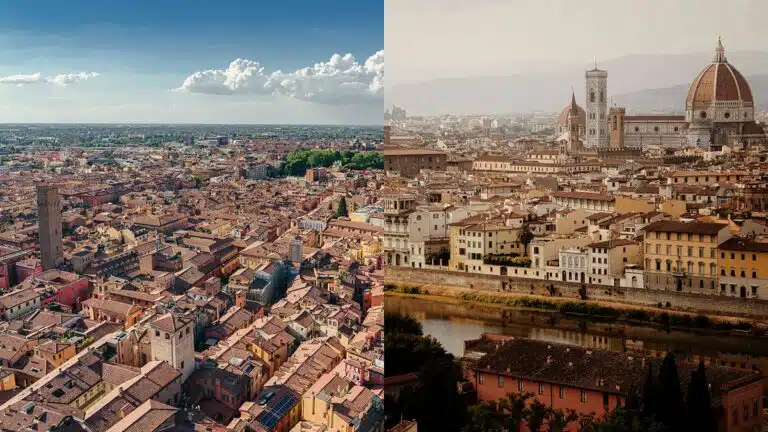
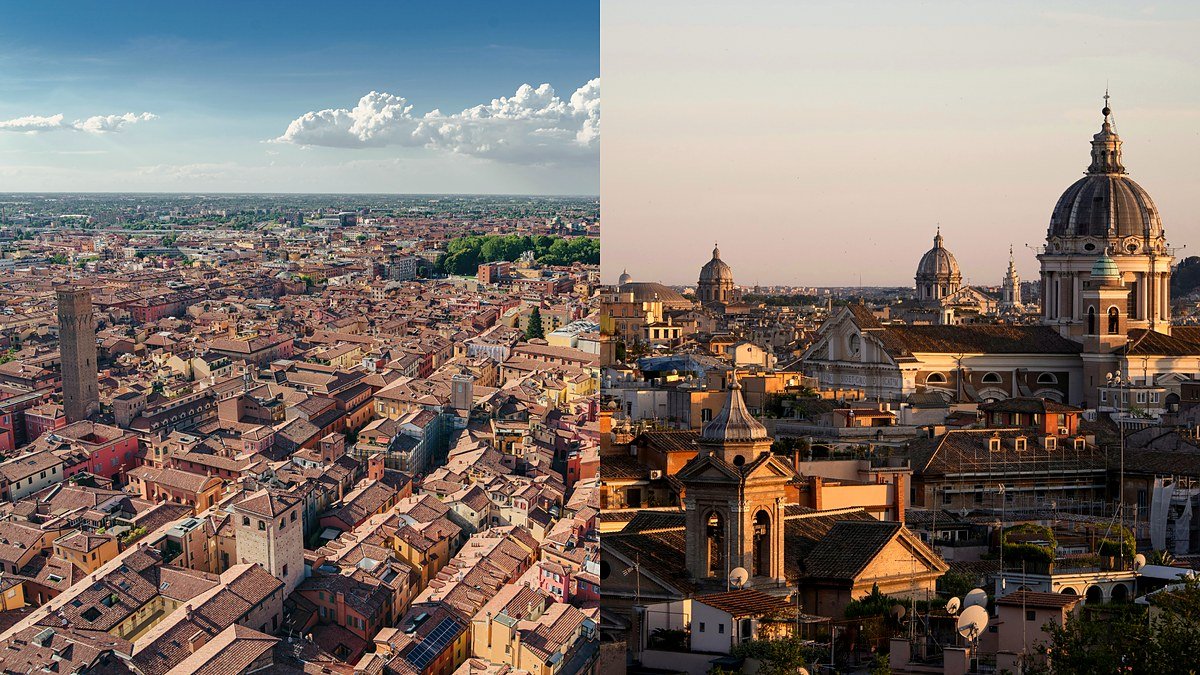
For a first trip centered on the Colosseum, the Roman Forum, and the Vatican Museums, choose Rome. Choose Bologna if food, a compact historic center, and easy rail access to northern and central Italy matter more.
Direct high-speed trains connect Bologna and Rome in about 2 hours. That makes a split stay easy, but Rome is usually too substantial to treat as a one-day substitute for staying there.
Bologna vs Rome at a Glance
| Category | Bologna | Rome | Better Fit |
|---|---|---|---|
| Ancient history | Strong medieval and university history | Colosseum, Forum, Pantheon, Vatican City | Rome |
| Major art and museums | Pinacoteca Nazionale, civic and university collections | Vatican Museums, Borghese Gallery, Capitoline Museums and more | Rome |
| Food-focused trip | Fresh pasta, mortadella, tortellini, ragù | Carbonara, cacio e pepe, gricia, Roman-Jewish dishes | Bologna |
| Crowds | Much lower visitor volume | Very high visitor volume | Bologna |
| Trip cost | Usually lower, but dates matter | Usually higher, especially around major sights | Bologna |
| Walkability | Compact historic center | Larger distances between major areas | Bologna |
| Rail day trips | Strong for Florence, Milan, Venice, Modena, Parma and Ravenna | Strong for Naples, Florence and southern connections | Depends on your route |
| First trip to Italy | Better for a slower, food-led trip | Better for headline monuments and ancient history | Rome |
History and Culture: Choose Rome for the Big Landmarks
Rome has the clear advantage if ancient history and major monuments are the purpose of your trip. The Colosseum, Roman Forum, Pantheon, Vatican Museums, St. Peter’s Basilica, Borghese Gallery, Castel Sant’Angelo, Trevi Fountain, and Piazza Navona can fill several days without stretching the itinerary.
Bologna offers a different historical experience. The University of Bologna dates its origins conventionally to 1088 and describes itself as the oldest university in the Western world. The Pinacoteca Nazionale holds Raphael’s Ecstasy of Saint Cecilia, alongside major works from the Bolognese and Italian schools.
The Two Towers remain symbols of Bologna, but this needs a 2026 caveat. Torre Asinelli is currently closed to the public, while Torre Garisenda is not accessible and is undergoing restoration.
If your trip is built around ancient Rome and the Vatican, stay in Rome.
Food: Bologna for an Emilia-Romagna Food Trip
Bologna is the stronger choice if you want to organize the trip around fresh pasta and Emilia-Romagna food traditions. Local specialties include tagliatelle al ragù, tortellini in brodo, mortadella, green lasagne, cotoletta alla bolognese, and friggione.
Rome has an equally distinct food identity, but it is a different one. Carbonara, cacio e pepe, gricia, amatriciana, coda alla vaccinara, supplì, and Roman-Jewish dishes give you plenty to build a food itinerary around.
The useful distinction is not that one city has “good” food and the other has “better” food. Bologna is the better fit for a traveler specifically interested in Emilian pasta, cured meats, Parmigiano Reggiano, and nearby food producers.
The Ultimate Bologna Food Guide: what makes the food here genuinely different
Crowds: Bologna Is Considerably Quieter
The difference in visitor volume is large. Rome recorded 52.92 million tourist overnight stays in 2025, while the Municipality of Bologna recorded 4.88 million. The figures are not a measure of how crowded every street will feel, but they explain why the two city centers operate on very different tourism scales.
For Rome’s major sights, planning matters. Colosseum entry uses a compulsory timed reservation, with sales opening 30 days before the visit date. The Vatican Museums also sell timed online entry through their official ticket portal.
Bologna still has busy weekends, trade-fair periods, and crowded central streets. It is not an empty alternative to Rome. It is simply the less tourism-intensive city.
Cost: Bologna Usually Costs Less, but Compare Your Dates
Bologna is generally the lower-cost choice, particularly when you compare accommodation away from major fair dates. The exact gap changes too much by season, neighborhood, and booking date to justify a fixed claim such as a set savings amount for every trip.
Use your actual dates for the comparison. That is more useful than relying on a generic three-star hotel range.
Bologna Trip Cost 2026: accommodation, food, transport, and activities
Day Trips: Bologna for the North, Rome for the South
Bologna is one of Italy’s most useful rail bases for northern and central Italy. Current Italo schedules list Bologna to Florence from 37 minutes, Milan from 1 hour 2 minutes, Venice from 1 hour 19 minutes, and Rome from 1 hour 57 minutes on the fastest services. Regional trains also connect Bologna with Modena, Parma, Ravenna, and Rimini.
Rome has a different advantage. Italo lists Rome to Naples from 55 minutes and Rome to Florence from about 1 hour 30 minutes. Pompeii requires an onward connection from the Rome-Naples high-speed corridor.
Choose Bologna if your onward plans focus on Emilia-Romagna, Florence, Venice, or Milan. Choose Rome if Naples and southern Italy are next.
Best Day Trips from Bologna by Train: nine destinations with full logistics
Can You Visit Rome as a Day Trip from Bologna?
Yes, but it is better treated as a targeted day than a substitute for staying in Rome. The fastest direct high-speed services take just under 2 hours each way, so the rail journey alone uses roughly 4 hours of the day.
A day trip can work if you choose one main sightseeing cluster and book it in advance. Trying to combine the Colosseum, Roman Forum, and Vatican Museums into one compressed first visit leaves little room for the city itself.
If Rome is one of the main reasons for your Italy trip, split your stay instead. The rail connection makes moving between the two cities straightforward.
Who Should Choose Rome?
Choose Rome as your primary base if:
- The Colosseum, Roman Forum, Vatican Museums, and Sistine Chapel are central to the trip
- You want several days for neighborhoods, churches, museums, and archaeological sites
- Naples, Pompeii, or other destinations farther south are also on your route
- This is your first Italy trip and you do not want to skip the country’s most famous ancient sites
Who Should Choose Bologna?
Choose Bologna if:
- Food culture, markets, fresh pasta, and Emilia-Romagna producers are a priority
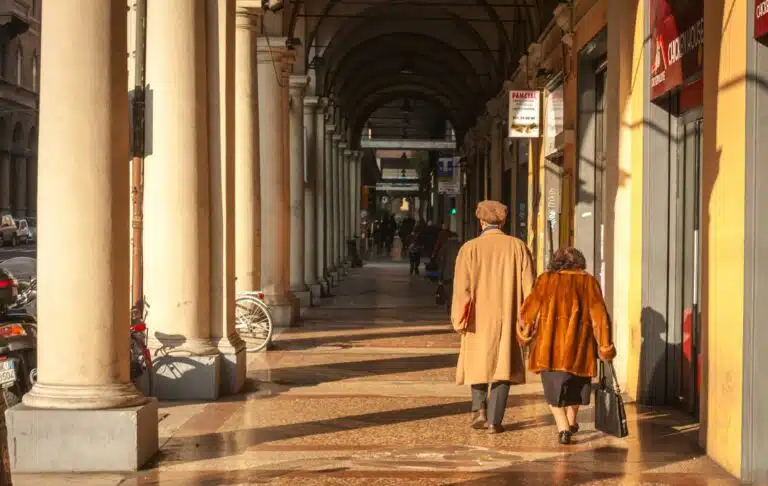
- You want a compact city that is easy to explore on foot
- Florence, Modena, Parma, Ravenna, Venice, or Milan are likely day trips or onward stops
- You prefer a lower-volume tourism environment
- A Bologna cooking class is already part of your plans
The Verdict
For ancient history and major monuments: Rome.
For an Emilia-Romagna food trip: Bologna.
For lower visitor volume and a more compact city: Bologna.
For rail trips across northern and central Italy: Bologna has the stronger position.
For Naples and southern Italy: Rome.
For a first trip that includes both cities: split the stay rather than using Rome only as a day trip from Bologna.
For the companion comparison with Florence:
Bologna vs Florence: Which to Visit, the more commonly debated comparison
Frequently Asked Questions
Is Bologna or Rome Better for Food?
Choose Bologna for a trip centered on fresh pasta, mortadella, tortellini, ragù, and Emilia-Romagna food producers. Choose Rome for carbonara, cacio e pepe, gricia, amatriciana, supplì, and Roman-Jewish cooking. Both cities have deep local food traditions.
Is Bologna or Rome Better for History?
Rome. The Colosseum, Roman Forum, Pantheon, Vatican City, and many other major sites give Rome a much broader range of ancient, early Christian, Renaissance, and Baroque history. Bologna is particularly strong for medieval, university, and regional art history.
Is Bologna Cheaper Than Rome?
Usually, yes, but the gap depends on your dates. Bologna often offers lower accommodation costs, while major trade fairs can raise room rates sharply (see our trade fair calendar). Compare the same dates and hotel category before treating any fixed nightly range as reliable.
How Far Is Rome from Bologna by Train?
Direct high-speed trains connect Bologna Centrale and Rome in about 2 hours. Italo currently lists its fastest Bologna-Rome service at 1 hour 57 minutes, with tickets advertised from €19.90 when lower fares are available.
Can You Visit Rome as a Day Trip from Bologna?
Yes, but keep the plan narrow. With about 4 hours of train travel on the fastest round trip, a Rome day trip works best for one prebooked area or a return visit. First-time visitors will usually get more from spending at least part of the trip in Rome.
Should I Base Myself in Bologna or Rome for a First Italy Trip?
Choose Rome if ancient sites and the Vatican are major priorities. Choose Bologna if your trip is more focused on food and northern Italian rail trips. If both cities matter, a split stay is usually a better plan than commuting between them.
Plan Your Italian Trip
- How Many Days in Bologna?
- Best Time to Visit Bologna
- Where to Stay in Bologna
- Bologna Trip Cost 2026
- Best Day Trips from Bologna, including Rome
- Bologna vs Florence: the companion comparison
- First Time in Bologna? 15 Tips
The practical side of a Bologna trip, including timing, budget, getting around, and how long to stay, is collected in Plan Your Trip.