2 Days in Bologna: The Perfect Weekend Itinerary (2026 Guide)
Bologna is often called the “underrated” neighbor of Florence and Venice. But let’s be honest: for most travelers, it is actually the superior choice.
Less crowded, friendlier locals, better food — and a medieval city center that you can walk end to end in 20 minutes. Known as La Dotta (The Learned), La Grassa (The Fat), and La Rossa (The Red), Bologna is the perfect size for a weekend trip. You can cover the highlights without rushing, eat your way through Italy’s greatest food city, and leave with a full stomach and zero tourist fatigue.
This 2-day Bologna itinerary is built around that reality. It covers the iconic sights, the best food experiences, the one view that beats everything in the city, and a few things most visitors miss entirely. It is specific, practical, and organized so you can follow it as-is or adapt it to your pace. Only have one day? Our Bologna in One Day guide covers the essential condensed sequence.
Is this your first time in Bologna? Our complete first-timer guide covers the 15 things you need to know before you arrive — including the ZTL zone, what to eat first, and what to skip.
Staying three days? Our 3 Days in Bologna itinerary adds the Modena day trip and a cooking class evening to the two-day foundation.
Practical Logistics for Your Trip
How to Get There
Bologna has excellent rail connections from across Italy. From Florence, the high-speed train takes 37 minutes. From Milan, about 60 minutes. From Rome, roughly 2 hours.
The main station, Bologna Centrale, is on the northern edge of the historic center — most hotels are within a 10–20 minute walk.
For airport connections, transport options, and getting around the city once you arrive:
Read our complete Bologna Transport Guide 2026
Where to Stay
For a 2-day trip, staying in Centro Storico or Santo Stefano puts you within walking distance of everything in this itinerary. Both areas are covered in detail with specific hotel picks in our full accommodation guide.
See the complete Where to Stay in Bologna guide
Day 1: The Icons & The Food
Morning: The Heart of the City
Start at Piazza Maggiore — Bologna’s main square and the natural center of everything. Arrive early if you can: the light is better, the square is quieter, and you get a cleaner sense of the architecture before the day crowds arrive.
From the piazza, walk into the Quadrilatero — the ancient market quarter just to the east. This is one of the best food markets in Italy, and it is completely free to explore. The streets are narrow, loud, and packed with:
- Prosciutto and mortadella hanging in deli windows
- Fresh pasta being made and sold by the kilo
- Parmigiano Reggiano wheels stacked ceiling-high
- Fishmongers, fruit sellers, and pastry shops shoulder to shoulder
Walk slowly. This is not a place to rush. Buy something to eat. A slice of mortadella or a small piece of Parmigiano from a vendor who will hand it over a counter — that is as Bolognese as it gets.
Lunch: Eating in the Quadrilatero
After the market walk, eat at or near the Quadrilatero. A few reliable options for a midday meal:
- Osteria dell’Orsa — loud, chaotic, full of students and locals. No reservations. Get there early or expect a queue. Order the Tagliatelle al Ragù. This is the correct move.
- Drogheria della Rosa — quieter, more romantic, slightly higher price point. Worth it for the atmosphere alone.
- Market standing lunch — buy directly from the stalls. Mortadella sandwich from Simoni, bread from one of the bakeries. Excellent and cheap.
For a full breakdown of what to eat in Bologna and where:
Read the Ultimate Bologna Food Guide
Afternoon: The Best View in Bologna
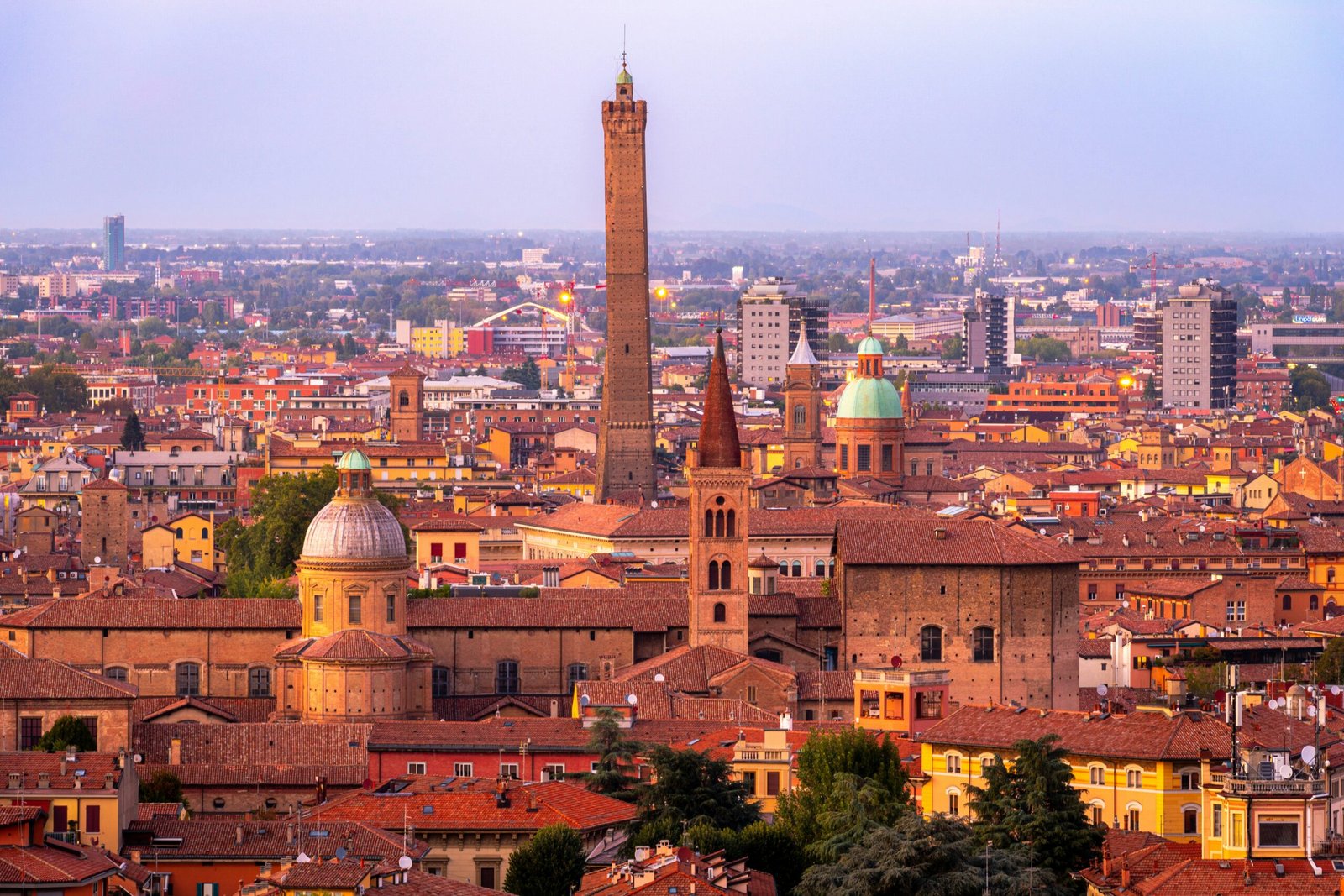
After lunch, most visitors head to the Due Torri (the Two Towers) and try to climb Asinelli — the taller one. Before you do, read this note:
The Asinelli Tower is currently closed for restoration (confirmed 2026). Even when open, it offers no view of the towers themselves since you are standing on top of one.
The better move: climb the Torre dell’Orologio (Clock Tower) in Piazza Maggiore instead.
Why it wins:
- Gives you a full view across the city including the Due Torri
- Partially has an elevator — more accessible than a full stairclimb
- Ticket includes access to the Municipal Art Collections
- Far shorter queues than Asinelli when it is open
Book in advance — space inside the tower is limited and slots fill up, especially on weekends.
After the tower, take 30 minutes to explore the Municipal Art Collections included with your ticket. Most visitors skip this — which means you will often have the rooms nearly to yourself.
If authentic Bolognese souvenirs are on your list:
See our Shopping in Bologna guide and What to Buy in Bologna
Evening: Aperitivo Then Dinner
Do not go straight to dinner. Bologna has one of the great aperitivo cultures in Italy — and skipping it on your first night is a mistake.
Between 6:00 and 8:00 PM, the city’s bars fill up. Order a Spritz or a glass of local Pignoletto wine. In some bars, a generous spread of snacks and small plates comes with your drink — no extra charge. It is one of the best-value rituals in Italian travel.
The best bars, the unwritten rules, and the neighborhoods to target:
Read the Ultimate Bologna Aperitivo Guide
After aperitivo, head to dinner. First-night recommendation: Osteria dell’Orsa if you did not go at lunch. Order Tagliatelle al Ragù and Tortellini in Brodo. No reservations — arrive by 7:15 PM or expect a wait. It is worth it.
Day 2: Views, Porticoes & Hidden Experiences
Morning: The Trek to San Luca
This is the best thing you can do on a clear morning in Bologna.
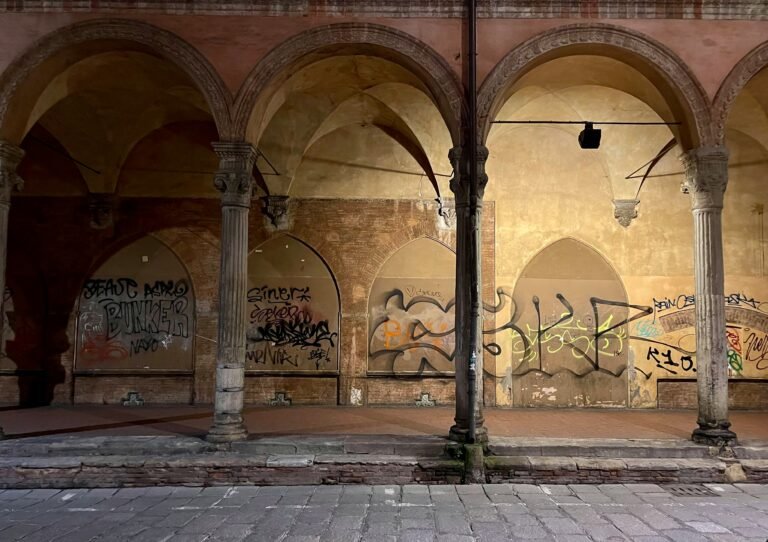
The Sanctuary of the Madonna di San Luca sits on a hilltop about 3.5 km from the city center, connected to Porta Saragozza by the longest covered portico in the world — 666 arches, stretching 3.8 km up the hill.
The walk takes roughly 45–60 minutes each way at a comfortable pace. The views from the top over Bologna and the surrounding Emilian hills are genuinely spectacular, especially in morning light.
Options for the climb:
- Walk the portico (the full experience — do this if your legs are up for it)
- Take the San Luca Express tourist train from the city center to the base, then walk the final section
- Take a taxi to the top and walk down through the portico — the downhill direction is significantly easier
The sanctuary itself is beautiful inside and free to enter. Allow 15–20 minutes at the top before heading back down.
Practical note for families: The San Luca Express tourist train is the family-friendly option — it avoids the full climb while still covering the portico section.
See our full Bologna with Kids guide for family-specific logistics
Lunch: A Proper Bolognese Sunday Feast
After the San Luca hike, you will have earned a serious lunch.
Head to the Mercato delle Erbe — Bologna’s covered food market on Via Ugo Bassi. Unlike the Quadrilatero, this one has seating inside and operates as a proper lunch destination. Multiple vendors, multiple cuisines, wine by the glass, excellent value.
Alternative: If you want a sit-down restaurant experience for Day 2 lunch, Trattoria Anna Maria is one of the most authentic in the city. Reservations strongly recommended. Order whatever the daily pasta is — it will be excellent.
Afternoon: The Things Most Visitors Miss
The stretch between 2:00 and 5:00 PM on Day 2 is where most itineraries go vague. Here is what is actually worth your time:
The Finestrella di Via Piella — a small window cut into a wall off Via Piella that frames a perfect view of the canal below. Bologna has canals — most of them were covered over in the 20th century — and this is one of the few places you can still see them. It takes 5 minutes to find and is one of the most photographed spots in the city for good reason.
The Biblioteca Salaborsa — walk into the main library in Piazza Nettuno. Look down through the glass floor at the Roman archaeological remains underneath. Free, beautiful, and almost completely missed by tourists.
The Archiginnasio — Bologna’s original university building, now a library. The anatomical theatre inside is one of the most extraordinary rooms in Italy. A few euros entry fee and entirely worth it.
For more Bologna surprises beyond the standard itinerary:
5 Hidden Gems in Bologna (That Most Tourists Miss)
Late Afternoon: The One Experience Worth Booking
If there is one thing to add to this itinerary beyond the sightseeing, it is a cooking class.
Bologna is the pasta capital of Italy. Taking a hands-on class — making Tagliatelle or Tortellini from scratch with a local host — is consistently the highest-rated experience in the city on every major review platform. It is also genuinely useful: you will go home knowing how to do something you could not do before.
The best classes run 3 hours, typically include a shared meal at the end, and cost €79–€160 depending on the format. Home cook sessions with Cesarine are the most authentic option. Villa experiences with Felsina Culinaria are the most memorable. Professional technique classes at Il Salotto di Penelope are the best for serious home cooks.
Book before you arrive. The best sessions fill up 2–4 weeks ahead in high season.
Evening: Day Trips or a Final Bolognese Dinner
If energy allows, this is a good evening to consider a short day trip extension. Modena is 18 minutes by fast train — the balsamic vinegar and Lambrusco capital, and home to one of the best traditional restaurants in Italy (Osteria Francescana, if you can get a reservation months in advance).
Alternatively, spend your final evening the Bologna way: a slow dinner at Trattoria di Via Serra or back at Osteria dell’Orsa if you cannot get enough of it.
For a full guide to day trips reachable from Bologna by train:
Best Day Trips from Bologna by Train
The 3 Best Day Trips from Bologna: Modena, Parma & Ferrari Valley
Frequently Asked Questions
Is 2 days enough time in Bologna?
Yes — two days is the ideal length for a first visit. You can cover all the main sights (Piazza Maggiore, the Quadrilatero, Due Torri, San Luca), eat well at every meal, and still have time for a hidden gem or two. You will leave wanting more, which is the correct outcome. Wondering if 2 days is the right amount of time for your trip?
Read our full guide on how many days to spend in Bologna
What is the best time of year to visit Bologna for 2 days?
April–June and September–October are the sweet spots. The weather is mild, the city is lively but not overwhelmed, and restaurant quality stays high because Bolognese chefs are cooking for locals as much as for tourists. July and August are hot and see some restaurant closures. December has the Christmas market and Tortellini in Brodo season — worth considering if you do not mind cooler temperatures.
Is Bologna walkable?
Almost entirely. The historic center is compact — you can walk from one end to the other in about 20 minutes. The main exception is San Luca, which requires either a long uphill walk (worthwhile) or the tourist train. Everything else in this itinerary is reachable on foot from a central hotel.
How much does a 2-day trip to Bologna cost?
Budget travelers can manage on €80–€100 per day excluding accommodation (cheap eats, free sights, budget transport). Midrange travelers spending on restaurants and experiences typically run €150–€200 per day. A cooking class adds €79–€160 as a one-time cost. For a full cost breakdown: Bologna Trip Cost 2026: Complete Budget Guide
Is Bologna safe for solo travelers?
Yes. Bologna is one of the safer cities in Italy for solo travelers, including solo women. The university population keeps the city lively and well-populated at night in most central areas. Read our full breakdown before your trip: Is Bologna Safe? Tourist Safety Guide & Areas to Avoid
Is this itinerary suitable for families with children?
With some adjustments, yes. The San Luca Express replaces the full hike, the Quadrilatero markets are engaging for older kids, and the Carpigiani Gelato Museum is specifically great for children. Full family logistics: Visiting Bologna with Kids: The Ultimate Family Guide
Ready to Book?
Everything you need to plan and book your 2 days in Bologna:
Accommodation: Full neighborhood guide: Where to Stay in Bologna
Experiences: Full class guide: Best Cooking Classes in Bologna
Transport: Bologna Transport Guide 2026
Plan Your Trip to Bologna
More guides to help you make the most of your visit: